
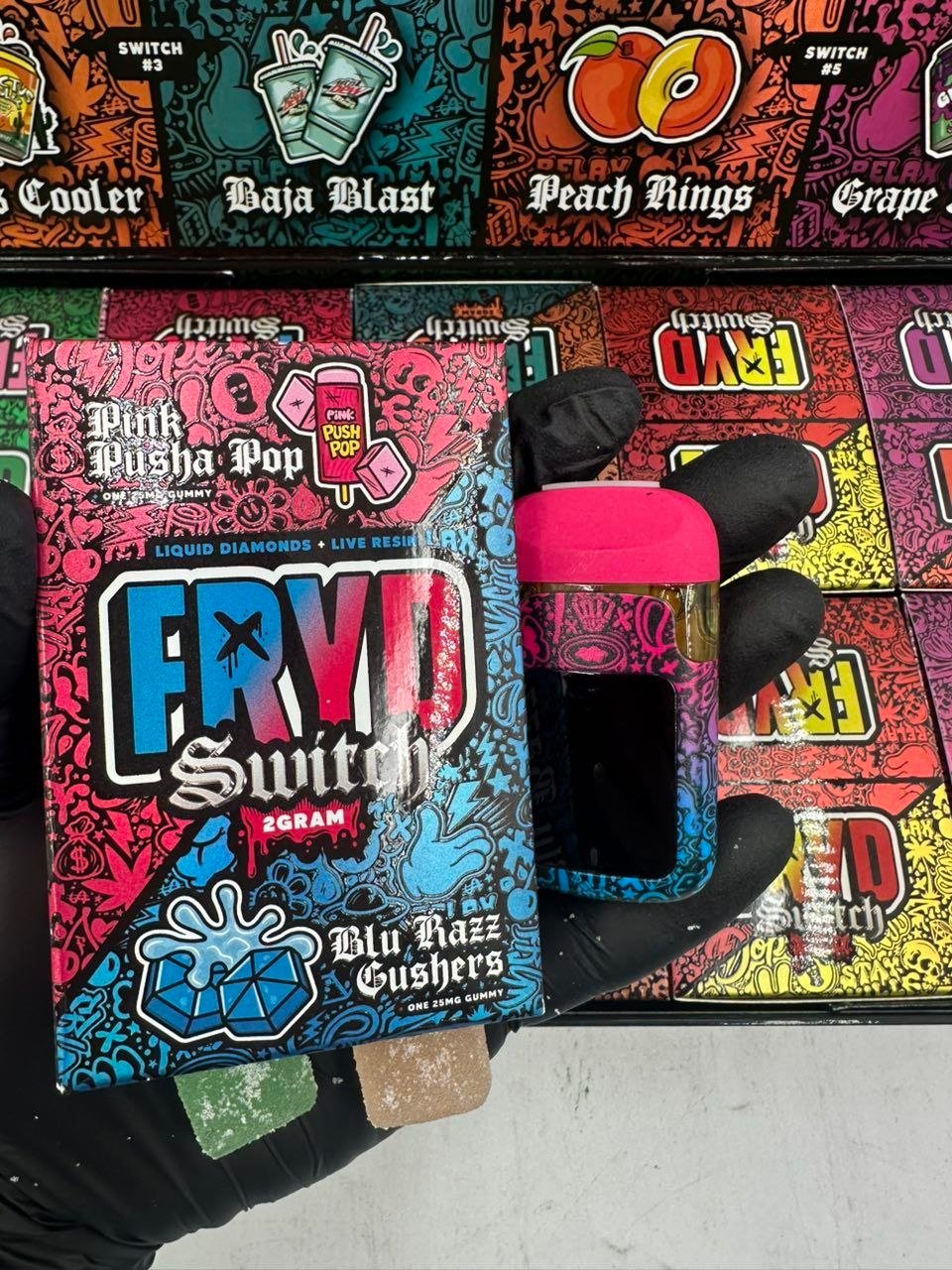
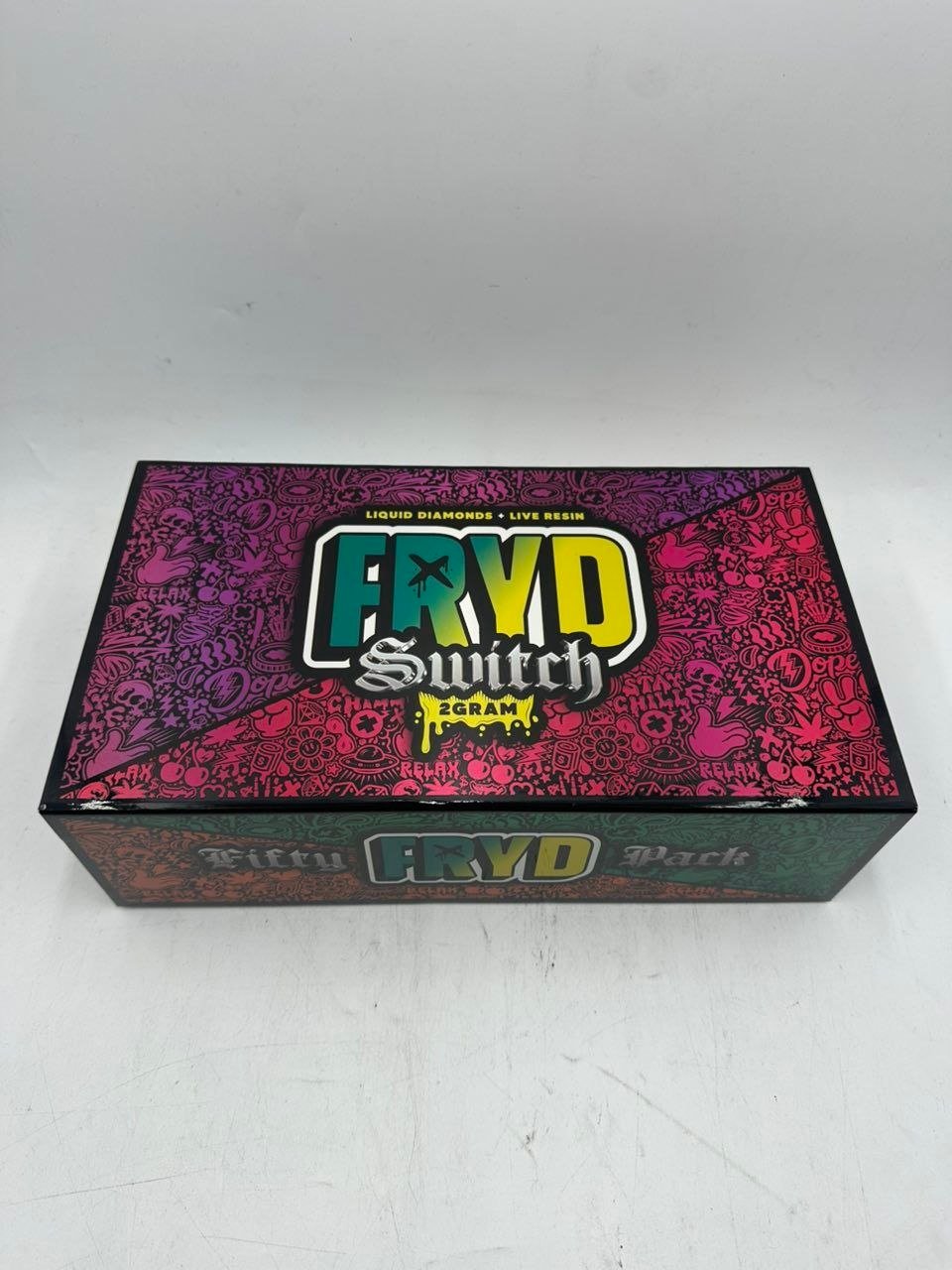
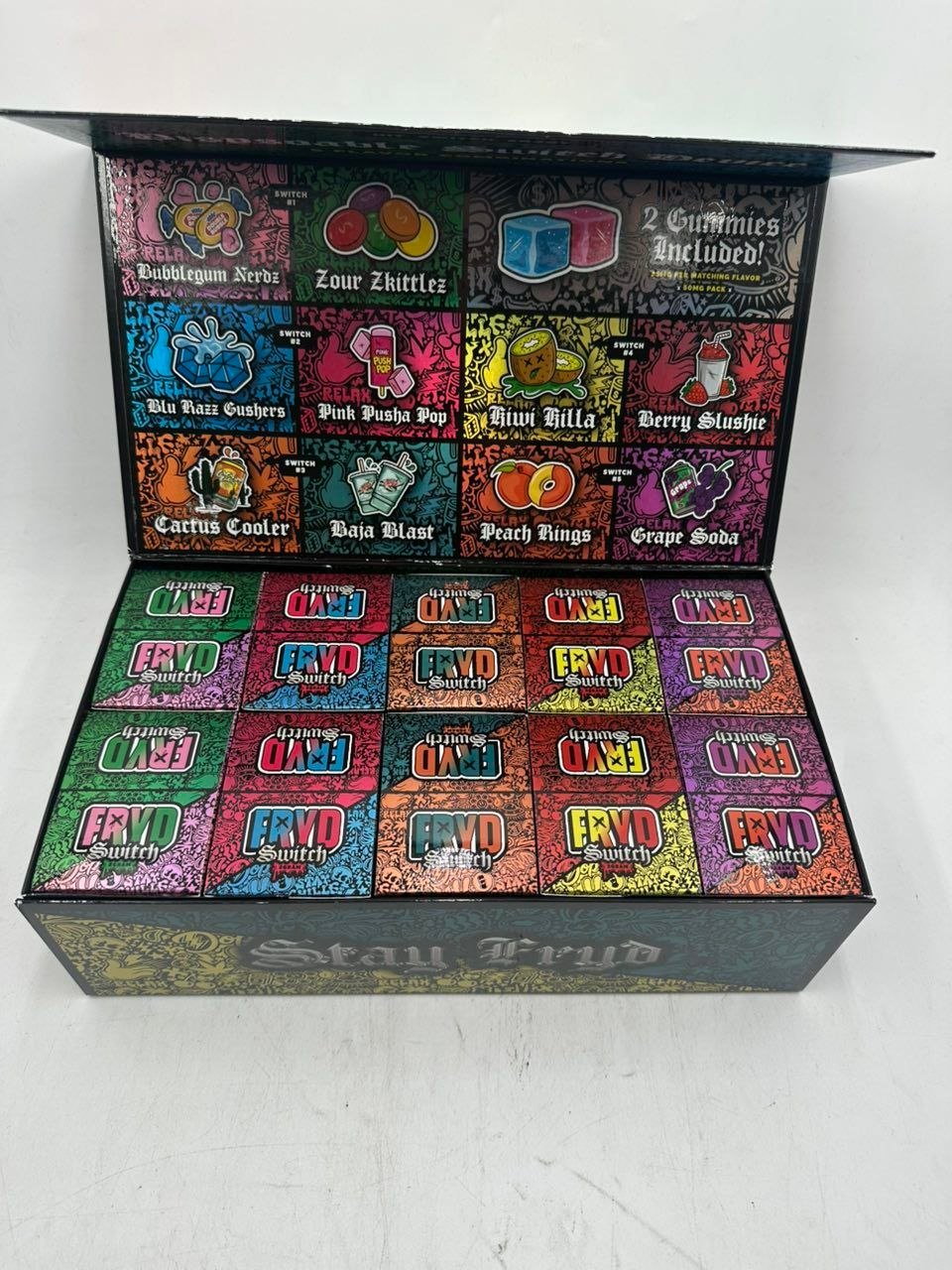
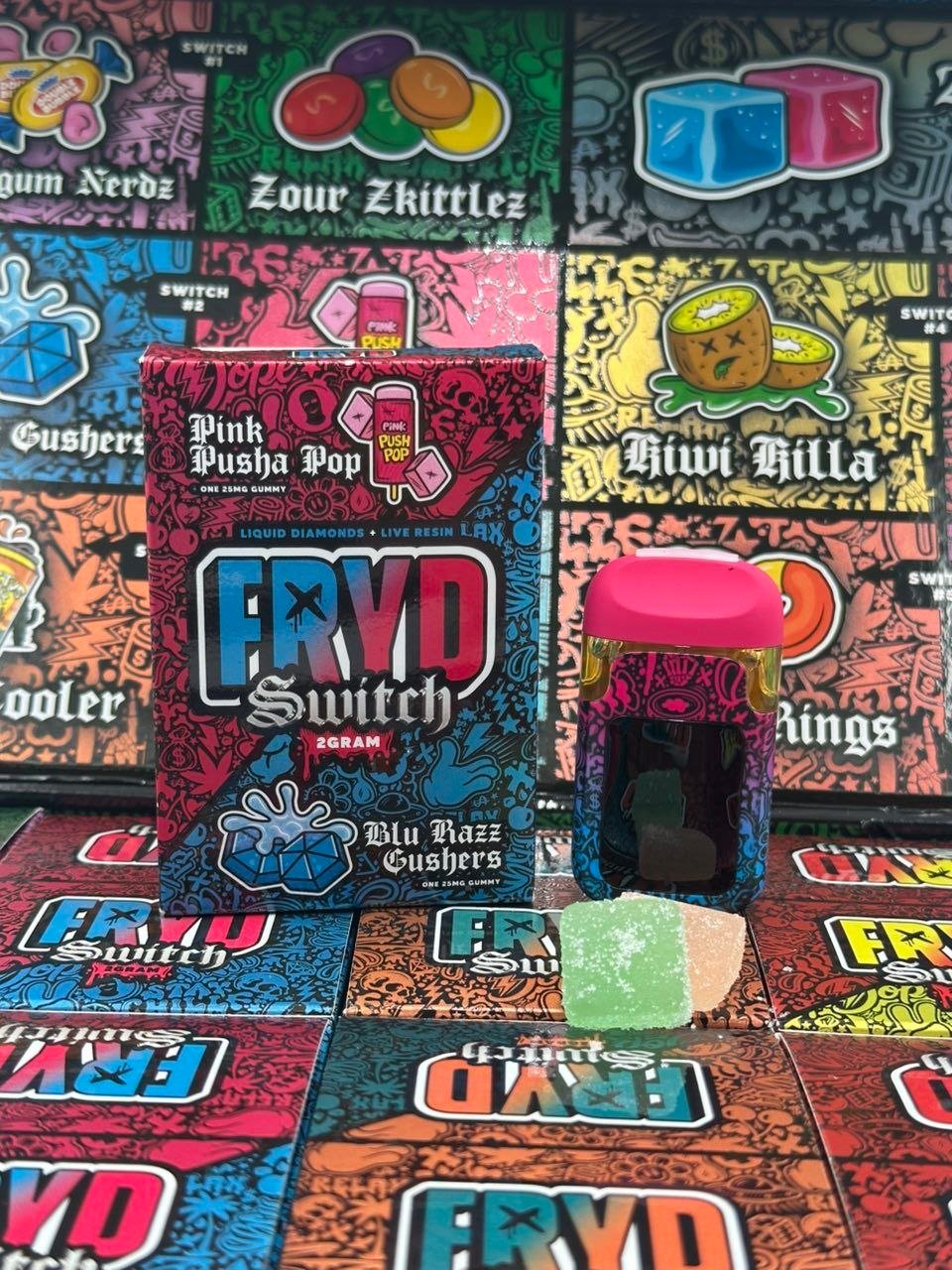
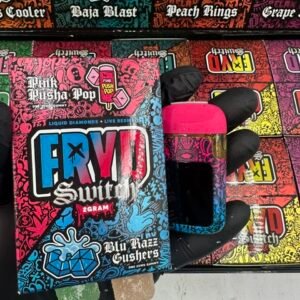
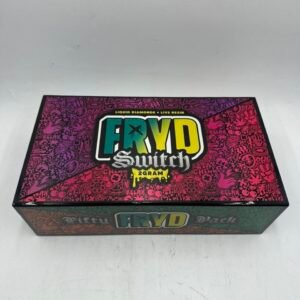
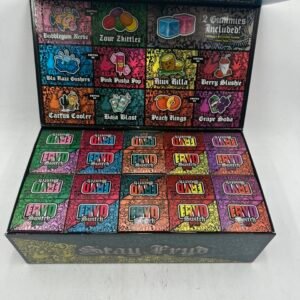
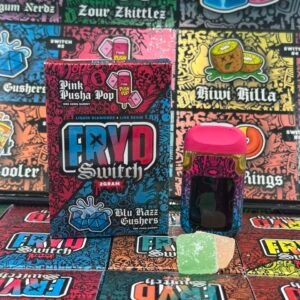
FRYD SWITCH 2G DISPOSABLE WITH GUMMIES
Price range: $30.00 through $1,300.00
The Fryd Switch 2G Disposable with Gummies is a combination-style product presented around a disposable vaping device and a separate gummy component. The product name indicates a 2-gram disposable format, while the accompanying gummies provide an additional edible format within the same product presentation.
Fryd Switch 2G Disposable With Gummies
Product Overview
The Fryd Switch 2G Disposable with Gummies is a combination-style product presented around a disposable vaping device and a separate gummy component. The product name indicates a 2-gram disposable format, while the accompanying gummies provide an additional edible format within the same product presentation.
Because formulations can vary by product version, market, and manufacturer, details such as cannabinoid content, ingredient composition, flavor profile, serving size, and laboratory testing should be confirmed from the specific package and manufacturer documentation.
What the Product Contains
The product is described as having two primary components: a disposable device and gummies. The disposable portion is designed as a pre-filled vaping product, while the gummy portion is an edible item.
The 2G designation generally refers to the amount of material contained in the disposable device. It does not, by itself, establish the concentration or total amount of any particular active ingredient.
Likewise, the number or size of gummies should not be assumed from the product name alone. Packaging information provides the appropriate details for the specific version.
Disposable Format
A disposable device combines the reservoir, heating hardware, battery, and mouthpiece into one compact unit. Unlike refillable systems, the device is normally supplied as a pre-filled product.
The 2-gram format provides a larger stated oil capacity than many smaller disposable formats. However, actual usage time varies considerably depending on individual inhalation patterns, device performance, storage conditions, and the formulation contained inside the device.
The exterior design may also vary between releases. Packaging, labeling, colors, and artwork can change without necessarily indicating a different formulation.
Gummy Component
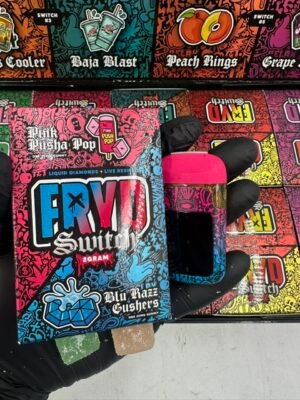
The gummy portion introduces an edible format alongside the disposable device. Gummies may contain active ingredients that differ substantially in concentration and effect depending on the formulation.
For that reason, the package label is particularly important. The stated amount per gummy, serving information, total active content, ingredients, allergens, and recommended storage conditions should all be reviewed before consumption.
Edible products can also have a different onset and duration from inhaled products. Consequently, the two formats should not be treated as interchangeable simply because they appear together in one package.
Flavor and Formulation Details
Flavor descriptions should be taken from the exact package or verified product documentation. Different releases can use different flavor names, formulations, or combinations.
Similarly, the appearance of the liquid does not provide a reliable method for determining its contents. Color, thickness, or aroma should not be used as substitutes for ingredient or laboratory information.
A verified product label remains the appropriate reference for formulation-specific details.
Device Characteristics
Disposable vape devices are generally designed around a self-contained battery and pre-filled reservoir. Their compact construction eliminates the need for a separate tank or external battery.
Performance can vary between individual devices. Factors such as battery condition, storage temperature, formulation viscosity, and manufacturing variation may influence vapor production and device behavior.
A device that appears similar externally can also contain a different formulation, so visual similarity should not be considered evidence of identical contents.
Packaging and Identification
Authentic packaging normally provides identifying information intended to distinguish the product from unrelated versions. Depending on the market, this information may include a product name, batch number, manufacturer details, ingredient information, warnings, and testing information.
Packaging should remain consistent with applicable local requirements. Missing, unclear, altered, or inconsistent labeling can make it difficult to establish exactly what a product contains.
For products containing regulated substances, local laws and age requirements should also be considered.
Storage Considerations
Storage conditions can affect both edible products and disposable devices. Excessive heat, direct sunlight, moisture, and unsuitable temperatures may affect product quality or packaging integrity.
The manufacturer’s storage instructions should take priority. Gummies should remain in their original packaging when appropriate, particularly where child-resistant packaging is required.
Products containing active ingredients should also be kept away from children and pets.
Usage Information
The appropriate way to handle the product depends on its formulation and the laws governing the product in the relevant location. The package directions and manufacturer information provide the most reliable guidance.
Because inhaled and edible products can behave differently, information for one component should not automatically be applied to the other.
In particular, edible products may take longer to produce noticeable effects than inhaled products. This difference makes accurate labeling and careful attention to serving information important.
Product Quality and Testing
Laboratory testing can provide information about a product’s cannabinoid profile, potency, contaminants, and other measurable characteristics when such testing is available.
A certificate of analysis can be useful because it connects laboratory findings with a particular batch or product sample. However, documentation should correspond to the actual product and batch rather than simply displaying a generic laboratory report.
Testing information can also change between production batches. Therefore, current documentation is preferable when available.
Legal and Regulatory Considerations
The legal status of disposable cannabinoid products and gummies varies significantly between jurisdictions. Rules can address possession, sale, age restrictions, labeling, transportation, ingredients, and permitted cannabinoid concentrations.
A product that is permitted in one jurisdiction may be restricted or prohibited in another. Therefore, local regulations should be checked before purchase, possession, transportation, or use.
The same consideration applies when products are transported across borders.
Responsible Product Information
Clear product information helps distinguish the disposable component from the edible component and reduces confusion about their respective formulations.
The product name alone cannot establish potency, ingredients, testing status, or legal classification. Those characteristics should come from the current packaging and supporting documentation.
Where information conflicts between a general product listing and the physical package, the package and verified manufacturer documentation should be treated as the more specific reference.
Fryd Switch 2G Disposable with Gummies is presented as a combination product featuring a 2-gram disposable device alongside gummies. The disposable and edible components represent different delivery formats and may have different formulations, labeling requirements, and usage characteristics.
Specific details—including ingredients, active content, flavor, gummy quantity, testing information, and legal status—can vary by version and jurisdiction. Consequently, accurate identification depends on the product’s current packaging, batch information, and manufacturer documentation.
For consumers and retailers, complete labeling provides the clearest way to distinguish the product and understand what is actually contained in each component.
Understanding the 2G Label
The “2G” designation is primarily a capacity reference for the disposable portion. It should not be interpreted as meaning that the device contains two grams of a particular cannabinoid or active compound.
The actual composition depends on the formulation used for the specific product. Cannabinoid concentration, terpene content, carrier ingredients, and other components can vary between products that have similar capacity labels.
For accurate information, the package should identify the relevant quantities and ingredients. When available, batch-specific laboratory documentation can provide additional confirmation.
Two Different Delivery Formats
One notable feature of this product presentation is the inclusion of both an inhalable disposable and an edible gummy component. These formats introduce active ingredients through different routes.
Inhaled products generally deliver their contents through the respiratory system, while gummies are processed through the digestive system. As a result, the timing and duration associated with each format can differ.
This distinction matters when reading product information because a stated quantity on one component does not automatically describe the other component.
Appearance and Construction
The disposable device typically has a compact construction intended to keep the battery and reservoir within a single unit. Its exterior may feature branded graphics, a mouthpiece, airflow openings, and other structural elements associated with disposable hardware.
The gummies, meanwhile, may have their own shape, color, texture, and packaging. These characteristics can differ depending on the production batch and formulation.
Physical appearance alone cannot verify authenticity or potency. Laboratory information and package details remain more useful for identifying the contents.
Batch Information
Batch identification is an important part of product traceability. A batch or lot number can connect a particular product to manufacturing records and, where applicable, laboratory testing.
When testing documentation is available, the batch number should correspond with the product being examined. A mismatch can make the documentation less useful because the report may relate to a different production run.
Clear batch information also makes it easier to distinguish different versions released at different times.
Laboratory Documentation
A laboratory report can provide measurable information about a tested sample. Depending on the testing program, the report may identify cannabinoid concentrations, contaminants, residual solvents, heavy metals, microbial contaminants, or other characteristics.
Not every product has identical testing requirements, and testing standards differ between jurisdictions. Therefore, the presence, format, and scope of documentation can vary.
A current report associated with the appropriate batch provides more relevant information than a generic statement about testing.
Differences Between Product Versions
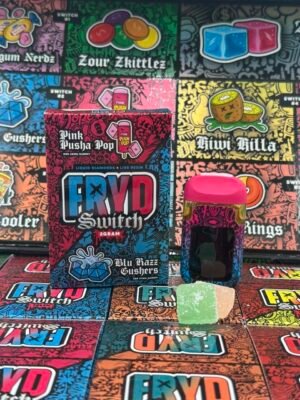
Products carrying the same general name can sometimes appear in different versions. Packaging changes, flavor variations, formulation updates, and market-specific labeling can all contribute to differences.
This means that a description written for one release should not automatically be treated as an exact specification for every product carrying the same name.
For an accurate listing, the particular version should be identified using the package, batch information, manufacturer details, and applicable documentation.
Information for Retail Listings
A clear retail listing can separate confirmed specifications from general product characteristics. Confirmed information might include the stated capacity, package contents, ingredient list, and manufacturer-provided details.
Unverified claims should be avoided because they can create confusion about the actual product.
Product pages are most useful when they reflect the physical packaging accurately and identify any details that may vary between batches or versions.
Packaging Integrity
The condition of packaging can provide useful information about the state in which a product was received. Damaged, leaking, opened, or improperly sealed packaging may require additional attention.
Disposable devices can also be affected by physical damage. Cracks, leaks, unusual deformation, or damaged components can indicate that the item has not remained in its intended condition.
The manufacturer’s packaging and safety information should be consulted whenever the condition of a product is uncertain.
Product Storage Environment
Temperature and environmental conditions can influence packaged products over time. Direct sunlight and excessive heat may affect packaging, while moisture can be particularly relevant to edible products.
The original packaging can help protect the contents from environmental exposure. Manufacturer-provided storage information should be followed because different formulations can have different requirements.
Keeping products separated from food intended for children and clearly identifying packaged items can also reduce accidental confusion.
Ingredient Transparency
Ingredient transparency provides useful context beyond the product name. A complete ingredient list can identify sweeteners, flavoring components, oils, additives, allergens, and other substances included in the formulation.
For gummies, the ingredient list can be particularly important because edible formulations often contain several components beyond the active ingredient.
For the disposable, ingredient information can help identify the nature of the formulation contained inside the reservoir.
Potency Information
Potency is a formulation-specific characteristic and should come directly from the product label or verified laboratory information.
A larger capacity does not necessarily mean a higher concentration. Likewise, the number of gummies in a package does not establish the amount of active ingredient in each individual gummy.
For this reason, capacity, concentration, serving size, and total active content are best treated as separate pieces of information.
Consumer Awareness
Understanding the difference between capacity and potency can make product labels easier to interpret. It also helps prevent assumptions based solely on product names or package artwork.
The disposable and gummies should likewise be considered separate components when reviewing their labels.
Clear information allows the contents, quantities, ingredients, and applicable warnings to be understood without relying on assumptions.
Authenticity Information
Authenticity can be difficult to determine from appearance alone. Brand graphics and packaging styles can sometimes be reproduced, while legitimate products may change their packaging over time.
Where available, manufacturer verification systems, batch information, authorized distribution channels, and laboratory documentation can provide additional context.
Any authenticity feature should be checked according to the manufacturer’s current instructions because verification systems can change.
Differences in Regional Requirements
Labeling and product requirements are not universal. Different jurisdictions may establish their own rules concerning active ingredients, packaging, warnings, testing, advertising, and age restrictions.
As a result, the same product name can be associated with different packaging or specifications in different markets.
Local requirements therefore remain relevant whenever the product is being listed, transported, possessed, or otherwise handled.
A Clear Product Reference
A useful product description should identify what is known without presenting assumptions as specifications. For Fryd Switch 2G Disposable with Gummies, the clearest confirmed characteristics are its combination of a 2-gram disposable format and an accompanying gummy component.
Other details should be tied to the exact product version.
This approach creates a more accurate reference and reduces confusion when packaging or formulations differ between releases.
The Fryd Switch 2G Disposable with Gummies combines two distinct product formats in one presentation. Its disposable component is identified with a 2-gram capacity designation, while the accompanying gummies provide an edible format with their own labeling and ingredient considerations.
The two components should not be assumed to have identical formulations or effects. Instead, each should be evaluated according to its own packaging, ingredient information, active-content labeling, and applicable documentation.
Product versions can change, so current information remains important. Batch numbers, laboratory documentation, ingredient lists, package quantities, and manufacturer information can all contribute to a clearer understanding of the specific item.
Ultimately, the most reliable product description is one that reflects verified information rather than relying on repeated marketing language or assumptions based on similar products.
How the Two Components Differ
Although the disposable and gummies appear together in the same product presentation, they represent two separate formats. The disposable relies on a device and inhalation, whereas the gummies are formulated as an edible product.
Their ingredients, labeling, and active-content measurements may therefore be presented differently. A product description should keep those distinctions clear rather than treating the entire package as one uniform formulation.
Reading the Package Carefully
Product packaging can contain several pieces of information in a relatively small space. The front panel may identify the brand and product name, while additional panels can provide ingredients, quantities, warnings, manufacturer details, and batch information.
The most useful specifications are usually found on the complete label rather than the product name alone. In addition, small differences in packaging can indicate different versions or market requirements.
Capacity Versus Quantity
Capacity and quantity describe different aspects of the product. The 2G designation relates to the stated quantity associated with the disposable component, while the gummies have their own count and active-content information.
These figures should not be combined automatically. For example, adding the stated weight of the disposable to the number of gummies would not produce a meaningful measure of potency.
Keeping each measurement separate makes the product information easier to understand.
Formulation-Specific Details
The exact formulation is dependent on the particular product version. Factors such as cannabinoid type, concentration, flavoring ingredients, and other components can differ between releases.
Consequently, broad claims about every Fryd Switch product should be avoided unless they are supported by current manufacturer information.
A version-specific description provides a more accurate representation of the item being examined.
Physical Design of the Disposable
The disposable format is generally built around an integrated design. A reservoir holds the formulation, while an internal battery supplies power to the heating element.
The mouthpiece provides the point of contact for inhalation, and the exterior housing protects the internal components.
Different production runs may use different physical designs, so details such as dimensions, charging features, airflow configuration, and indicator lights should only be included when they have been verified for the exact model.
The Role of Product Labeling
Labeling connects the physical product with its stated specifications. It can identify the manufacturer, product version, contents, ingredients, warnings, and other information relevant to the item.
Accurate labeling is especially useful when several products have similar names or packaging styles.
For that reason, the label should remain the primary reference when a general product description conflicts with information printed on the package.
Gummies as a Separate Product Type
Gummies are commonly manufactured using a mixture that is formed into individual pieces. Their texture, flavor, shape, and ingredients can vary according to the formulation.
The package may identify the number of pieces as well as the amount of active material associated with each serving or the entire package.
Those measurements should be read separately because the total package amount does not necessarily equal the amount contained in one gummy.
Shelf and Storage Conditions
Product stability can be influenced by its surrounding environment. Heat, light, humidity, and prolonged exposure to unsuitable conditions can affect packaging and product quality.
Following the storage information provided with the specific product helps preserve the condition of both the disposable and edible components.
The original packaging can also help retain identifying information such as the batch number, ingredient list, and expiration or manufacturing details where provided.
Traceability Across the Product
Traceability is particularly useful for products manufactured in multiple batches. A batch identifier can help connect a particular package with its production records.
When a laboratory certificate is supplied, the corresponding identifier can help establish whether the document applies to the product in question.
This information is more meaningful than relying solely on brand artwork or a product photograph.
Manufacturing Variation
Manufacturing processes can produce minor differences between individual units. Variations may involve appearance, packaging, flavor presentation, or hardware characteristics.
Such differences do not automatically establish that a product is counterfeit or defective. However, significant inconsistencies may warrant checking the manufacturer’s information.
The exact specifications supplied for the relevant production batch provide the clearest reference.
Why Current Information Matters
Product information can change over time. Manufacturers may update packaging, ingredients, hardware, or labeling to accommodate new formulations and regulatory requirements.
Older descriptions can therefore become inaccurate even when the product name remains unchanged.
A current package, recent manufacturer documentation, and batch-specific information offer a stronger basis for describing the product.
Comparing Label Information
When examining the product, several details can be compared against one another. The product name, capacity, package contents, ingredient information, batch number, and manufacturer information should form a reasonably consistent set of identifiers.
If one element appears inconsistent, additional verification may be appropriate.
This approach is more reliable than making a judgment based on one feature, such as package color or logo placement.
Information That Should Remain Separate
Certain product characteristics should not be combined into a single specification. Capacity, potency, serving size, flavor, ingredient composition, and package quantity each describe different attributes.
Separating these details prevents misleading interpretations.
For the Fryd Switch 2G Disposable with Gummies, this is particularly relevant because the product contains two distinct formats with potentially different labeling requirements.
A More Accurate Product Listing
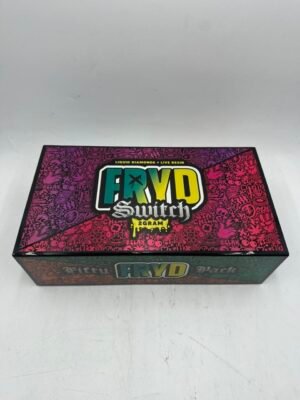
A detailed listing can describe the product without making unsupported claims. The disposable can be identified by its stated 2-gram format, while the gummy component can be described according to the quantity and specifications printed on the package.
Additional information can then be added when it has been verified from reliable documentation.
This structure keeps the description informative while allowing different product versions to be represented accurately.
Product Information in Context
The name Fryd Switch 2G Disposable with Gummies provides a basic identification of the product, but it does not provide every specification needed to characterize the item completely.
The 2G reference identifies a quantity associated with the disposable format. The gummy reference identifies the inclusion of an edible component. Beyond those points, the exact details depend on the particular version.
That distinction is important when preparing product information for a catalog, inventory record, or informational page.
Overall Product Characteristics
The product combines a compact disposable format with an edible gummy component. Its presentation therefore differs from products that contain only a disposable or only an edible item.
The two formats have separate physical characteristics and may have different ingredients, concentrations, and labeling information.
A complete description is strongest when each component receives its own factual treatment.
Closing Information
Fryd Switch 2G Disposable with Gummies can be identified through its combination of a stated 2-gram disposable format and accompanying gummies. The exact specifications, however, depend on the particular version and production batch.
For accurate product information, current packaging and manufacturer documentation remain the most useful references. Ingredient lists, active-content figures, batch identifiers, testing records, and local requirements can provide additional context.
Keeping those details distinct allows the product to be described clearly without relying on assumptions or generic wording shared across unrelated products.
Be the first to review “FRYD SWITCH 2G DISPOSABLE WITH GUMMIES”
Related products
THC DISPOSABLE


THC DISPOSABLE
THC DISPOSABLE
THC DISPOSABLE
THC DISPOSABLE
THC DISPOSABLE

THC DISPOSABLE

THC DISPOSABLE
Reviews
There are no reviews yet.