
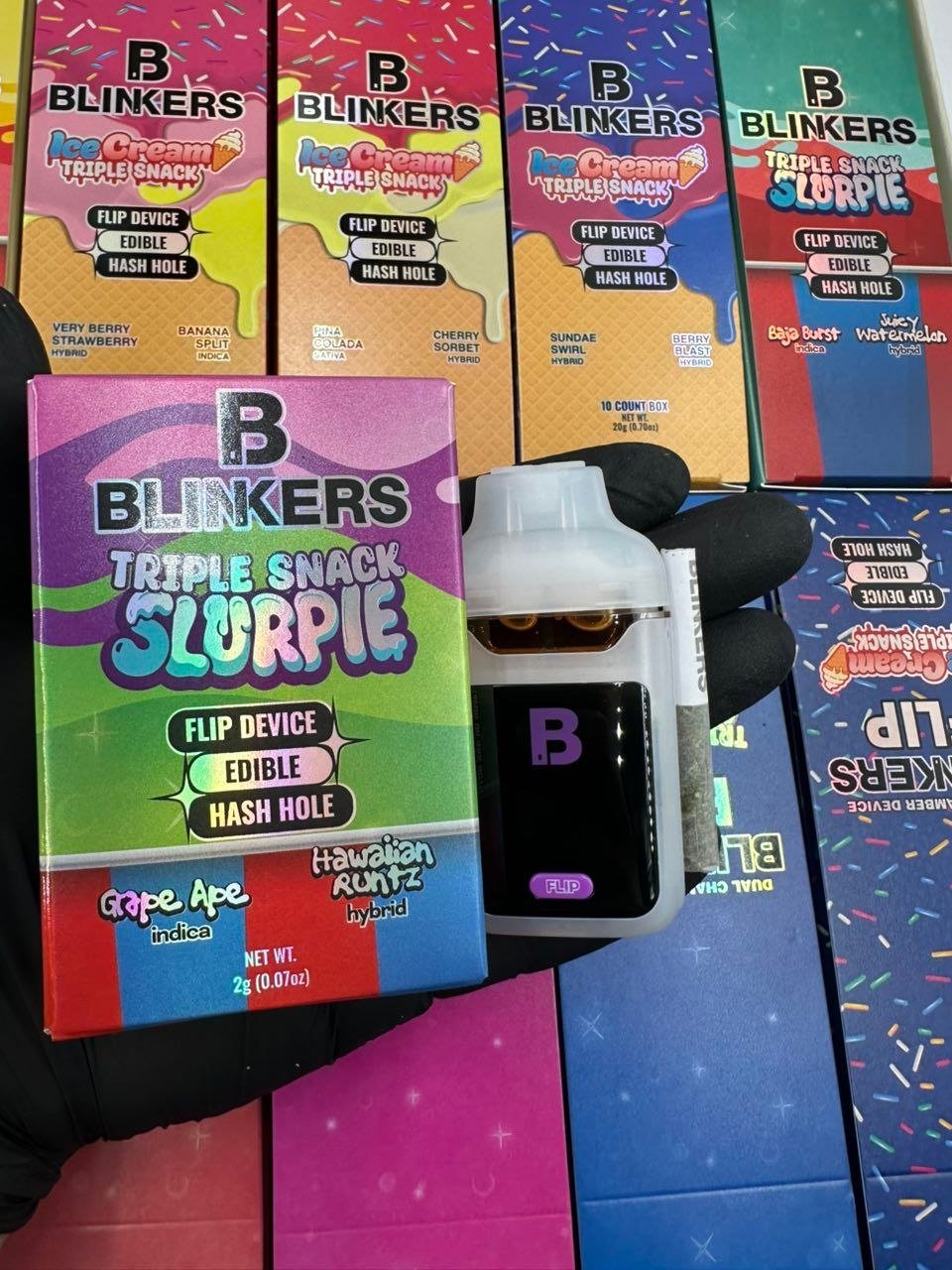
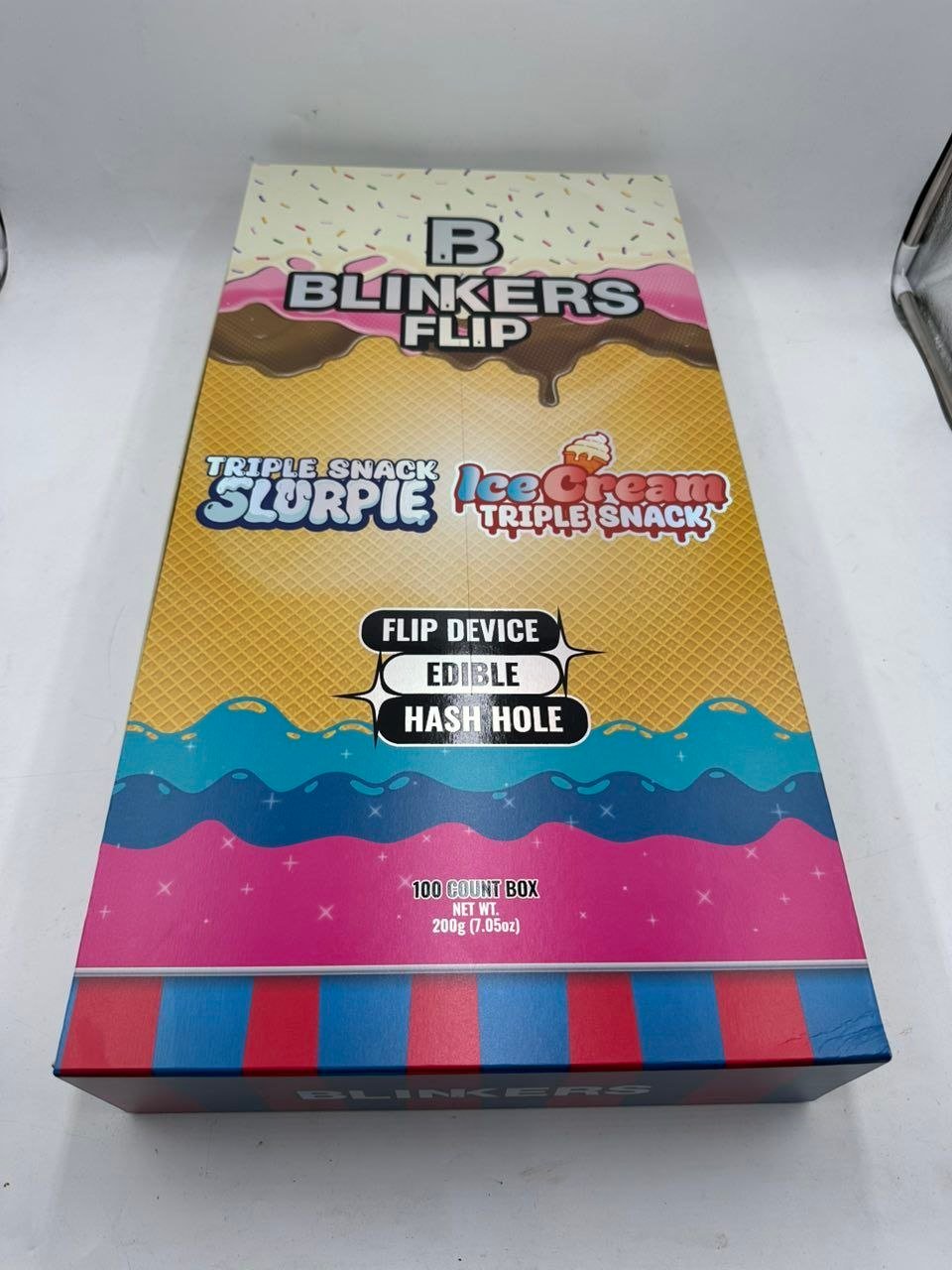
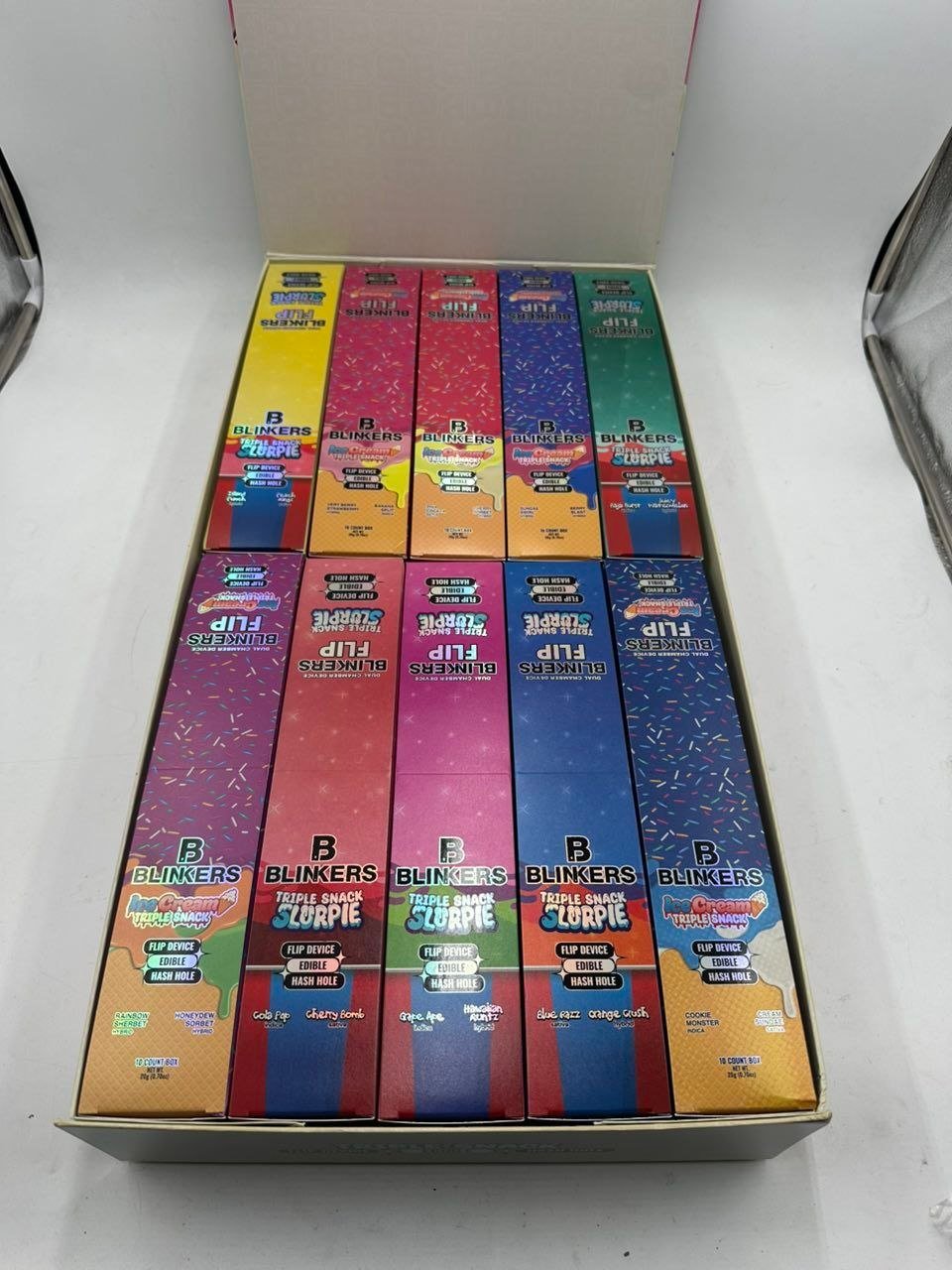
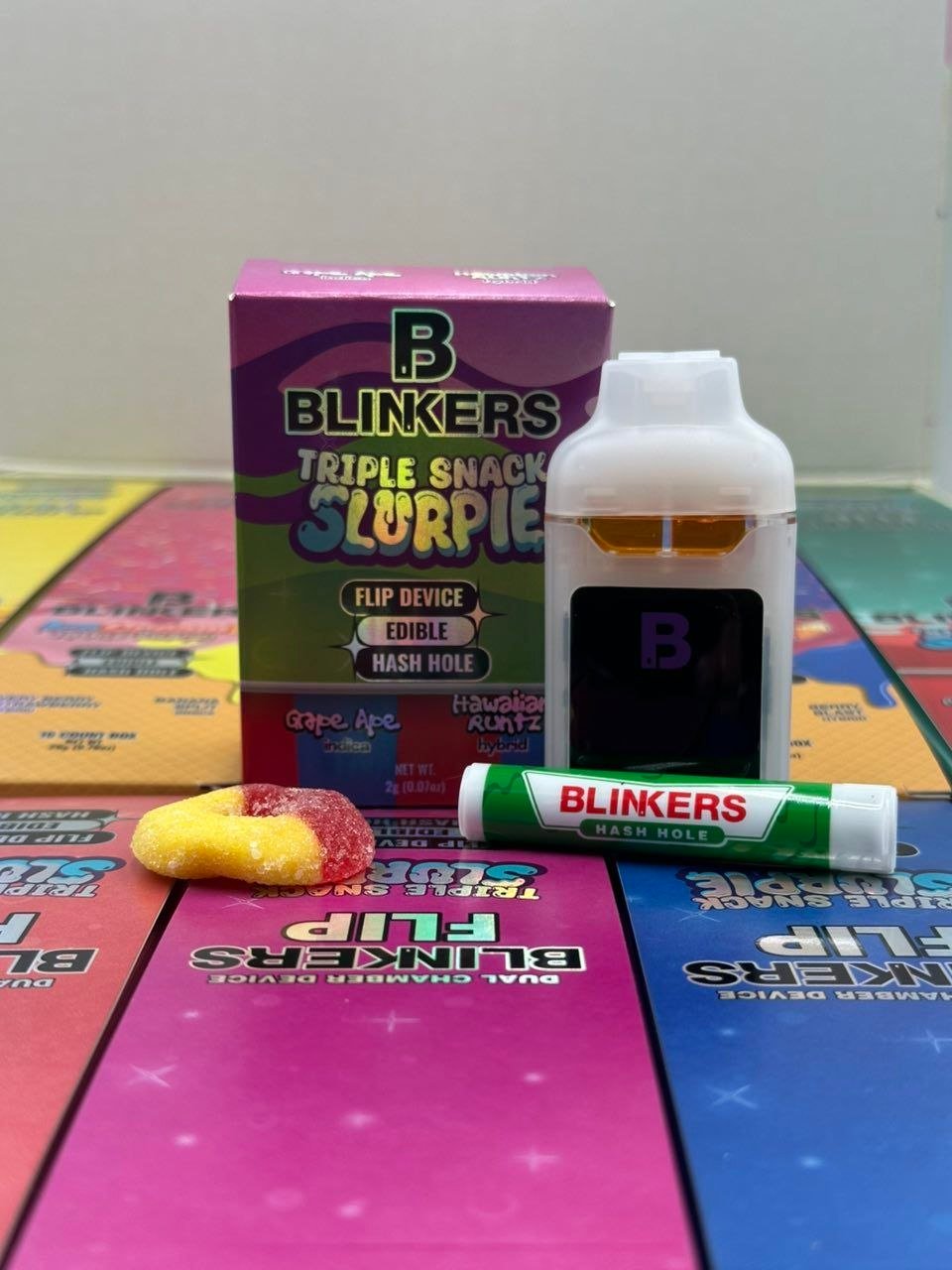
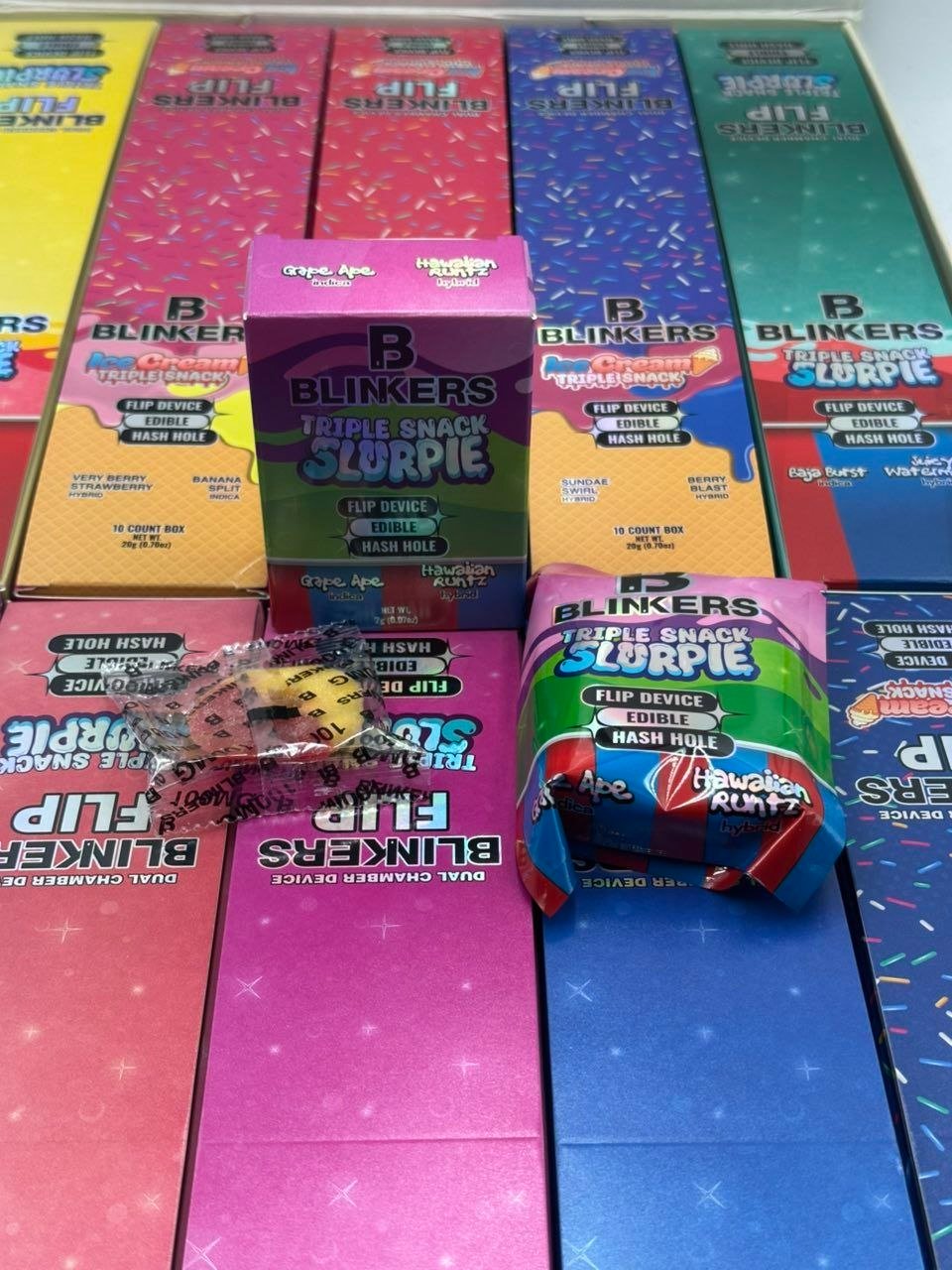
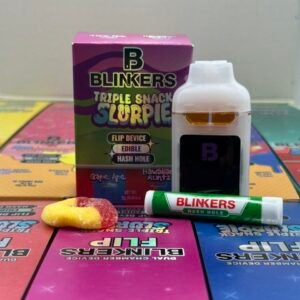
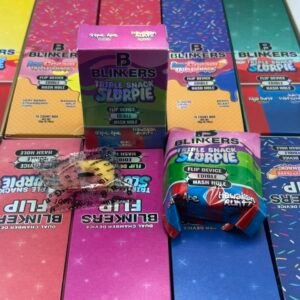
BLINKERS FLIP TRIPLE SNACK ICE CREAM X SLURPIE 2G DISPOSABLE
Price range: $30.00 through $1,300.00
The Blinkers Triple Snack 2g Disposable is a compact, ready-to-use disposable device associated with the Blinkers product line. Its name highlights two defining features: a 2-gram capacity and a multi-flavor concept built around the Triple Snack presentation.
Blinkers Triple Snack 2g Disposable
An Overview of the Triple Snack Format
The Blinkers Triple Snack 2g Disposable is a compact, ready-to-use disposable device associated with the Blinkers product line. Its name highlights two defining features: a 2-gram capacity and a multi-flavor concept built around the Triple Snack presentation.
The disposable format combines the cartridge and battery into one portable unit. Because the components are integrated, there is no separate battery assembly or cartridge housing to manage. The device is designed around simplicity, with the hardware and oil contained within a single product.
The Triple Snack name suggests a flavor-focused presentation. Exact flavor profiles, cannabinoid composition, and formulation can vary depending on the specific production batch and market. For that reason, the package labeling remains the most reliable source for identifying the contents of an individual unit.
Understanding the 2g Capacity
The 2g designation refers to the stated amount of extract or oil contained in the device. Compared with smaller formats, a two-gram capacity represents a larger reservoir within the same general disposable category.
Capacity alone, however, does not determine how long a device will last. Actual consumption varies considerably between individuals. Factors such as draw duration, frequency of use, airflow, device construction, and oil viscosity can all affect the number of draws obtained from a disposable.
Therefore, the 2g figure is best understood as a measurement of the product’s stated contents rather than a guaranteed number of sessions or inhalations.
Triple Snack and Flavor Presentation
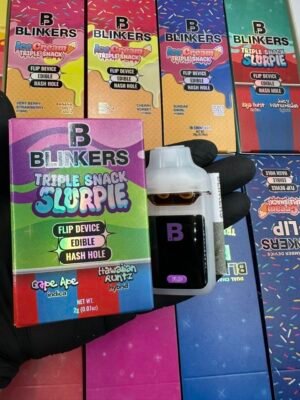
Flavor is an important part of the Triple Snack concept. The product name presents it as a combination-oriented option rather than a simple single-profile disposable.
Flavor descriptions should be checked against the packaging because names and formulations can differ between versions. A product listing should not assume specific tasting notes unless they are confirmed by the manufacturer or the original packaging.
Depending on the formulation, a flavor profile may involve several complementary notes. Fruit, sweetness, creaminess, candy-inspired characteristics, or other aromatic elements can appear in products within this category. However, those characteristics should not be treated as confirmed attributes of a particular Blinkers Triple Snack unit without supporting product information.
This distinction is useful because product names sometimes remain consistent while regional releases or batches receive different labeling.
Disposable Hardware Design
The hardware follows the familiar disposable format. A typical disposable combines an internal battery, heating element, reservoir, mouthpiece, and exterior housing.
The integrated construction eliminates the need for a separate rechargeable battery in the basic disposable design. The user therefore encounters fewer individual components than with a traditional cartridge-and-battery setup.
The exterior can also contribute to the product’s portability. A compact body generally takes up less space than a larger modular vaporizer system. As a result, disposable devices are often associated with convenience and straightforward storage.
Hardware specifications can vary, though. Battery capacity, activation method, airflow configuration, charging capability, and heating technology should be verified from the specific unit rather than assumed from the product name alone.
Oil and Formulation Information
The contents of a disposable are particularly important when evaluating the product. Cannabinoid concentration, terpene composition, additives, and extraction method can influence the characteristics of the finished formulation.
The exact formulation for a Blinkers Triple Snack 2g Disposable should be confirmed through its label or accompanying laboratory documentation. Product names by themselves do not establish cannabinoid percentages or potency.
Where laboratory testing is available, the certificate of analysis can provide additional information about cannabinoid concentrations and tested contaminants. Such documentation can also help distinguish verified product information from descriptions that merely repeat an online listing.
For regulated products, packaging and laboratory information are therefore more useful than assumptions based on the product name.
Draw Characteristics and Device Performance
Disposable vaporizer performance can change throughout the life of the device. The first draws may differ from later draws because airflow, battery output, and oil movement can influence the heating process.
A consistent experience depends partly on the interaction between the battery and heating element. The oil must also reach the heating area properly. Temperature, viscosity, storage conditions, and device orientation can affect this process.
Some disposable designs use automatic draw activation, while others may incorporate different activation systems. Since the precise hardware configuration can vary, the manufacturer’s instructions should be treated as the authoritative source for operation.
Performance should also be distinguished from potency. A larger cloud does not necessarily indicate a stronger formulation, and a smaller cloud does not necessarily mean that the contents are weaker.
Portability and Physical Format
One of the defining characteristics of a disposable is its compact construction. The integrated design removes several pieces of equipment that would otherwise accompany a reusable vaporizer.
The Blinkers Triple Snack 2g Disposable follows this general format. Its reservoir, heating system, and power source are housed within one unit, creating a single-piece product rather than a collection of separate components.
This format can also simplify storage. There is no loose cartridge or external battery to keep together. Nevertheless, the device should be stored according to the manufacturer’s recommendations, particularly regarding temperature and exposure to direct sunlight.
Extreme temperatures can affect oil viscosity and battery performance. Proper storage can therefore help preserve the physical condition of the product.
Packaging and Product Identification
Packaging provides important information about an individual disposable. Product names, batch information, manufacturing details, cannabinoid content, warnings, and testing information may appear on the exterior.
The exact information depends on the jurisdiction and the manufacturer. Accordingly, product descriptions should not replace the information printed on the original package.
Authenticity information can also be important. When applicable, batch numbers, QR codes, verification systems, or laboratory references may provide additional information about a specific unit.
The product’s appearance alone should not be treated as proof of authenticity. Packaging can change over time, and counterfeit products can sometimes imitate legitimate designs.
What the 2g Label Does and Does Not Mean
The two-gram designation is straightforward, but it can sometimes be misunderstood.
It describes the stated quantity of material contained in the product. It does not establish a specific number of inhalations, a guaranteed duration, or a fixed amount consumed during every draw.
Individual consumption patterns vary. A longer draw generally uses a different amount of material than a shorter draw. Likewise, repeated use over a short period can reduce the contents more quickly than occasional use.
For that reason, capacity and duration should be considered separate measurements.
Storage Considerations
Storage conditions can affect disposable devices. Heat may change the viscosity of oil, while very cold conditions can make the contents thicker. Batteries can also be affected by temperature extremes.
A cool, dry location away from direct sunlight is generally appropriate for many electronic products, although the manufacturer’s specific storage recommendations should take priority.
The device should also remain away from children and pets. Regulated cannabinoid products are not appropriate for unintended use, and their packaging should remain intact when the product is not being handled.
Storage also matters when the product will not be used immediately. Keeping the device in unsuitable conditions can contribute to changes in physical performance.
Safety and Responsible Handling
A disposable vaporizer contains both a formulation and an electronic battery. Consequently, both aspects require appropriate handling.
The device should be inspected for visible damage before use. Leakage, unusual physical damage, or other signs of a compromised unit warrant caution.
The product should not be modified or dismantled. Altering an integrated disposable can expose internal components and create unnecessary risks.
Likewise, damaged batteries should not be treated as ordinary waste. Disposal requirements can differ by location, particularly because electronic devices may contain battery components.
Local regulations should also be considered. Laws governing cannabinoid products, possession, use, transportation, and disposal differ significantly between jurisdictions.
Product Consistency and Batch Differences
Manufacturing batches can sometimes produce small differences in appearance, labeling, or formulation. These differences do not necessarily mean that a product is counterfeit or defective.
However, substantial differences should be investigated through the manufacturer, authorized documentation, or applicable verification system.
For this reason, a product description should focus on confirmed characteristics instead of presenting every possible specification as universal.
The same principle applies to flavor descriptions. A particular Triple Snack version may have a flavor profile that differs from another release carrying a similar name.
How Product Information Can Be Verified
Several sources can help establish the details of a particular unit.
The first source is the original packaging. It can provide the product name, stated quantity, warnings, batch information, and other required labeling.
A second source may be a manufacturer-provided verification system. When available, such systems can connect a batch number or code with additional product information.
Laboratory documentation can provide another layer of verification. A certificate of analysis may identify tested cannabinoid levels and screening results for certain contaminants.
Together, these sources provide a clearer picture than a product title alone.
Appearance and Branding
The exterior design of a disposable contributes to its overall identity. Branding, printed graphics, labeling, and the shape of the housing can distinguish one product line from another.
Because packaging designs may change, the appearance of an older version should not automatically be treated as the current standard. Regional requirements can also result in differences in warning labels or packaging information.
The most reliable identification method remains a combination of the product name, packaging information, batch details, and manufacturer verification where available.
Disposable Versus Reusable Devices
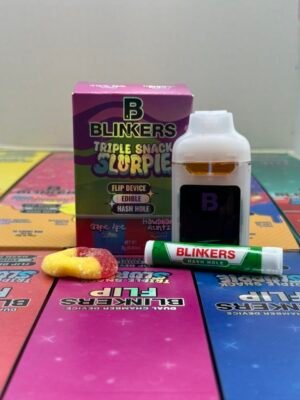
Disposable and reusable vaporizers use different approaches to hardware.
A disposable integrates the major components into one unit. A reusable system generally separates the battery from the cartridge or reservoir. The latter can therefore involve more individual components and may require additional maintenance.
The disposable format reduces the number of separate pieces involved. However, once the integrated device reaches the end of its usable life, the entire unit is normally handled as a disposable electronic product rather than simply replacing one small component.
Neither format should be evaluated solely by capacity. Hardware design, formulation, battery characteristics, maintenance requirements, and local disposal rules all contribute to the overall product experience.
Reading the Label Carefully
The label remains one of the most important references for any regulated product.
Information such as total contents, cannabinoid concentration, batch number, manufacturing details, warnings, and testing references can vary between products. Therefore, a generic online description should never override the information supplied with the individual unit.
The label can also help distinguish between similar product names. A product line may contain several versions with different capacities or formulations, and small differences in the printed information can be significant.
A Closer Look at the Triple Snack Concept
The Triple Snack identity places emphasis on variety within the product’s presentation. Rather than relying exclusively on a basic single-flavor description, the name suggests a more layered or multi-note concept.
Still, the exact meaning of a flavor name should come from the product’s official description. Creative product names do not always correspond to standardized flavor terminology.
This is particularly relevant for products with candy-inspired or fruit-inspired names. The name can establish a theme without guaranteeing that every expected tasting note will be present.
As a result, the most accurate description focuses on the confirmed formulation and avoids treating marketing terminology as laboratory data.
Battery and Heating System
The battery provides the electrical power required by the heating element. When activated, the heating system converts the contents into an inhalable aerosol.
Battery performance depends on several factors. Capacity, heating resistance, activation design, and usage frequency can all affect the operating characteristics of a disposable.
Some devices are draw-activated, while others use alternative controls. The specific design should be confirmed through the packaging or manufacturer’s documentation.
Battery behavior can also change as the device approaches the end of its operating life. This does not necessarily indicate a change in the formulation itself; it may simply reflect reduced electrical output.
End-of-Life Considerations
A disposable eventually reaches the end of its useful life. The point may be associated with depleted contents, a depleted battery, or a hardware issue.
The product should not be opened to recover remaining material. Integrated electronics and batteries are not designed for consumer disassembly.
Local waste-management rules should be followed when disposing of the device. Because electronic components can require specialized handling, ordinary household disposal may not always be appropriate.
Where electronic recycling or battery collection programs exist, their requirements provide a useful reference.
The Blinkers Triple Snack 2g Disposable is an integrated disposable vaporizer identified by its 2g capacity and Triple Snack product name. Its format combines the reservoir, heating hardware, and battery into a compact unit.
The two-gram designation describes the stated quantity of contents, while the Triple Snack name identifies the particular product presentation. Exact flavor, cannabinoid concentration, hardware specifications, and testing information should be verified through the packaging and manufacturer documentation for the individual unit.
Because formulations and packaging can vary between releases, accurate product information depends on the specific version being examined. Laboratory documentation, batch information, and official labeling can provide additional verification where available.
Overall, the product can be understood through four main characteristics: its disposable construction, stated 2g capacity, flavor-oriented Triple Snack identity, and integrated electronic hardware. Those characteristics provide a useful factual overview without assuming specifications that may differ between individual versions or production batches.
Design Details That Define the Device
The Blinkers Triple Snack 2g Disposable belongs to a category built around an all-in-one design. Instead of separating the cartridge, battery, and heating system, the components are contained within one compact body.
This construction gives the product a distinct physical profile. The exterior serves as both a protective shell and the primary surface for branding and labeling. Meanwhile, the internal reservoir holds the stated two grams of formulation.
Because everything is contained within one device, there are fewer loose components to keep track of. This also means that the internal parts generally are not intended to be replaced individually.
The overall design reflects the straightforward nature of disposable hardware. At the same time, individual versions can differ in dimensions, activation method, charging features, and other technical details.
The Role of the Reservoir
The reservoir is one of the central components inside a disposable. It holds the formulation until it reaches the heating system.
A two-gram reservoir provides the product with a relatively substantial stated capacity within the disposable category. However, capacity should not be confused with guaranteed longevity.
Several variables affect how quickly the contents are consumed. Draw length, frequency, airflow, heating behavior, and individual usage patterns can all influence consumption.
Consequently, two people using the same device may experience different operating durations. The stated capacity remains a fixed product specification, while actual duration depends on how the device is used.
Heating Technology and Aerosol Production
The heating element plays a key role in converting the formulation into an aerosol. Electrical energy from the battery reaches the heating component, allowing the contents near the element to be vaporized.
The exact heating technology used in a particular Blinkers Triple Snack version should be confirmed through manufacturer information. Product names alone do not establish whether a particular coil construction or heating system is present.
Temperature management can also influence the character of the aerosol. Different hardware configurations may produce differences in vapor density, draw resistance, and overall consistency.
For that reason, hardware specifications are most accurately described when they have been confirmed for the exact version being discussed.
Why Formulation Matters
Hardware represents only one part of a disposable. The formulation inside the reservoir is equally important when identifying the product.
Cannabinoid concentration, terpene composition, extraction method, and other formulation characteristics can influence the final product.
However, none of these details should be assumed from the name Triple Snack alone. A product name can describe a particular release without providing a complete chemical profile.
The package label or laboratory documentation provides a more dependable reference. When testing information is available, it can offer additional details about cannabinoid levels and screening results.
This distinction is especially useful when several products have similar names but different formulations.
Flavor Names and Consumer Expectations
Flavor names often create an initial impression of what a product represents. In the case of the Triple Snack name, the wording suggests a playful, food-inspired identity.
Nevertheless, a product name does not function as a standardized tasting chart. The actual aromatic and flavor characteristics depend on the formulation.
A complete product description therefore benefits from separating confirmed information from descriptive language. This approach avoids presenting an unverified flavor profile as a guaranteed characteristic.
Packaging remains the appropriate reference for identifying the exact flavor version. If a manufacturer provides a detailed flavor description, that information can then be used to describe the individual release more precisely.
Physical Portability
The compact nature of disposable hardware is one of its most recognizable characteristics.
An integrated device generally occupies less space than a setup containing a separate battery and cartridge. The Blinkers Triple Snack 2g Disposable follows this general product architecture.
Its single-unit construction also reduces the number of external accessories associated with the basic device. There is no separate cartridge body that needs to be stored independently.
Even so, portability does not remove the need for responsible storage. The device contains electronic and formulation components, so environmental conditions remain relevant.
Temperature and Storage Environment
Temperature can influence both electronic hardware and oil-based formulations.
High temperatures may affect the physical properties of the contents and can also place additional stress on battery components. Very low temperatures can produce the opposite effect by increasing viscosity and potentially changing how the formulation moves through the device.
For that reason, a stable environment away from excessive heat and direct sunlight is generally preferable.
The manufacturer’s storage guidance should take priority because different devices can have different material and battery specifications.
Packaging as a Source of Information
The package surrounding a disposable often contains information that cannot be determined from the device itself.
Labels may identify the product name, stated quantity, batch number, manufacturer, warnings, cannabinoid information, and testing references. The exact requirements depend on the jurisdiction where the product is distributed.
Packaging can also help identify the specific version of a product. This is particularly useful when a brand has released multiple products with related names.
A clear product description should therefore complement the package rather than replace it.
Batch Numbers and Traceability
Batch information can provide a useful connection between an individual product and its manufacturing records.
When a manufacturer provides a verification system, the batch number or another identifying code may be used to access additional information. Such systems can help establish whether the information associated with a particular product corresponds with the physical unit.
Testing documents may also use batch identifiers. Matching these details can provide a stronger basis for confirming the identity and reported composition of a product.
Because verification systems differ, the manufacturer’s own instructions should be considered the primary reference.
Recognizing Similar Product Names
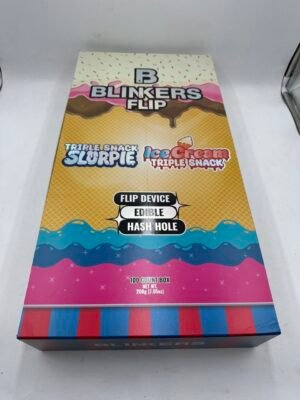
Product catalogs can contain several items with similar names. A name such as Triple Snack may appear alongside products with different capacities, hardware configurations, or formulations.
The 2g designation helps distinguish this particular version from smaller or larger formats. Still, the full label should be checked before treating the products as identical.
Small differences in packaging can indicate meaningful differences in contents. This is why a complete product description should avoid combining specifications from separate versions.
Hardware and Formulation Work Together
A disposable’s characteristics result from the interaction between its formulation and hardware.
The oil needs to move through the internal system toward the heating element. Meanwhile, the battery must provide enough electrical energy for the heating system to function as designed.
Changes in viscosity can influence oil movement. Changes in battery output can influence heating behavior. Therefore, performance is not determined by a single component.
This relationship helps explain why storage conditions, battery condition, and formulation characteristics can all contribute to the behavior of an integrated disposable.
Understanding Capacity Versus Usage
The stated 2g capacity provides a useful reference point, but it does not predict individual consumption.
One person may take occasional draws, while another may use the device more frequently. Draw duration can also vary considerably.
Therefore, the same product can have noticeably different practical lifespans depending on usage patterns.
This is an important distinction when describing disposable products because a capacity figure is a product measurement, not a promise about duration.
Product Information and Authenticity
Authenticity is another consideration when evaluating branded disposable products.
A legitimate-looking exterior does not independently establish the origin of a product. Packaging, batch information, manufacturer details, and verification systems can provide additional evidence.
Where a manufacturer offers an official verification process, that source is generally more useful than an unrelated product listing.
Laboratory documentation can also provide information about a specific batch when such documentation is publicly available.
Differences Between Releases
Product lines can change over time. A newer version may have different packaging, hardware, flavor options, or labeling requirements while retaining a related product name.
This means older images and descriptions may not accurately represent every current unit.
Regional regulations can contribute to these differences as well. Labels required in one market may differ from those required elsewhere.
Consequently, the exact unit in hand remains the best reference for its physical and regulatory specifications.
The Importance of Clear Product Descriptions
A useful product description separates confirmed specifications from general category characteristics.
For the Blinkers Triple Snack 2g Disposable, the clearest confirmed identifiers are the Blinkers name, Triple Snack designation, and stated two-gram capacity.
Other details should be connected to the exact version whenever possible. This includes cannabinoid percentages, flavor composition, battery capacity, charging capability, heating technology, and laboratory results.
Such an approach produces a description that remains useful without presenting uncertain information as fact.
Responsible Product Handling
Electronic disposable products contain components that require appropriate handling.
The device should remain intact rather than being opened or modified. Internal batteries and heating components are not intended for consumer repair.
If a device appears damaged, leaking, unusually hot, or physically compromised, it should not be treated as an ordinary functioning unit.
Storage should also prevent accidental access by children or pets. Appropriate local rules should be followed for possession, transportation, use, and disposal.
End-of-Use Product Management
Eventually, the disposable reaches the end of its usable life.
At that point, the device should be handled according to applicable electronic-waste and battery-disposal requirements. Different locations have different systems for collecting electronic products.
The integrated construction means that the battery and remaining hardware are part of the same unit. Disassembly is therefore not an appropriate substitute for proper disposal.
Where dedicated collection programs exist, their instructions can provide the clearest guidance.
A Balanced View of the Product Format
The disposable format offers a compact alternative to multi-component vaporizer systems. Its integrated construction means fewer separate parts, while its stated two-gram capacity places it within a larger-capacity segment of disposable products.
At the same time, the integrated design means that individual components generally cannot be replaced independently. Once the device reaches the end of its useful life, the complete unit must be handled appropriately.
The Triple Snack identity adds another layer through its flavor-oriented presentation. Yet the exact formulation remains dependent on the specific product version.
Final Perspective
The Blinkers Triple Snack 2g Disposable combines a two-gram stated capacity with an integrated disposable design and a flavor-focused product identity.
Its main physical components are housed within a single unit, which distinguishes it from reusable systems that rely on separate batteries and cartridges. The product’s actual formulation, flavor profile, hardware specifications, and testing information depend on the specific version and production batch.
For accurate identification, the original packaging remains particularly important. Batch numbers, manufacturer information, laboratory documentation, and verification systems can provide additional context when available.
Ultimately, the most reliable product information comes from confirmed specifications rather than assumptions based solely on the product name. This makes the Blinkers Triple Snack 2g Disposable easier to understand while keeping distinctions between stated specifications, general disposable characteristics, and version-specific information clear.
Be the first to review “BLINKERS FLIP TRIPLE SNACK ICE CREAM X SLURPIE 2G DISPOSABLE”
Related products


THC DISPOSABLE

THC DISPOSABLE
THC DISPOSABLE
THC DISPOSABLE
THC DISPOSABLE
THC DISPOSABLE
THC DISPOSABLE
THC DISPOSABLE
Reviews
There are no reviews yet.