
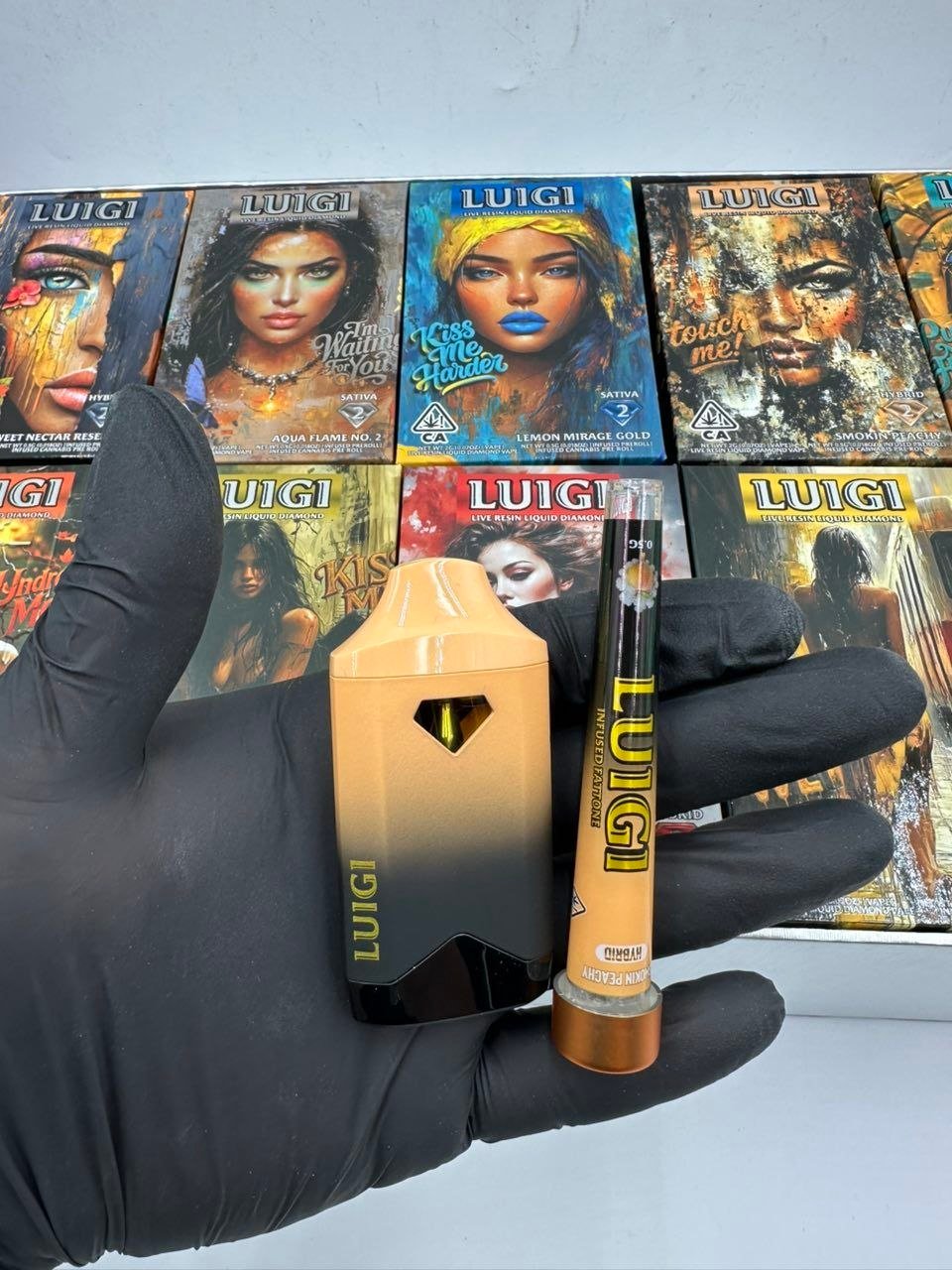
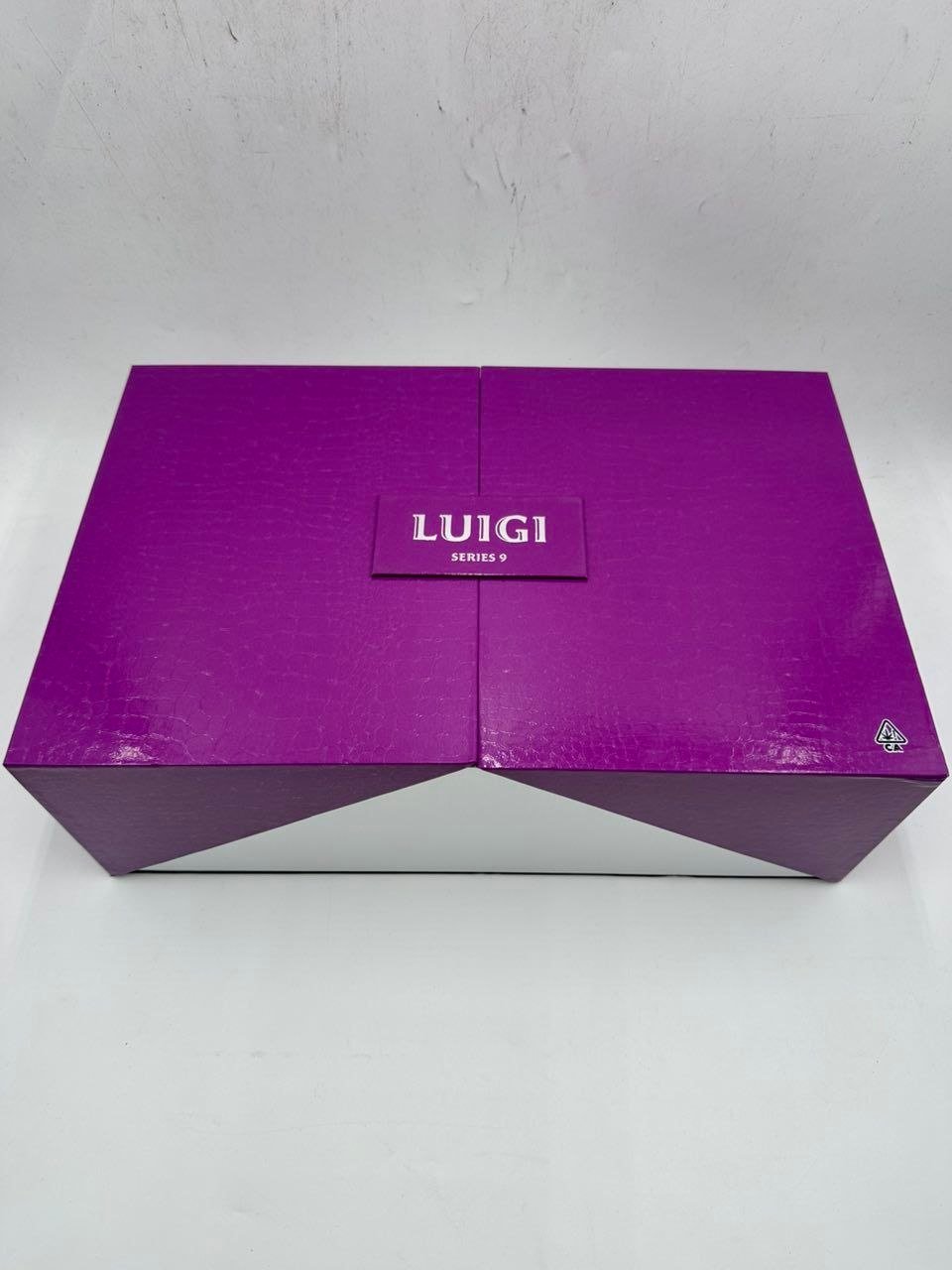

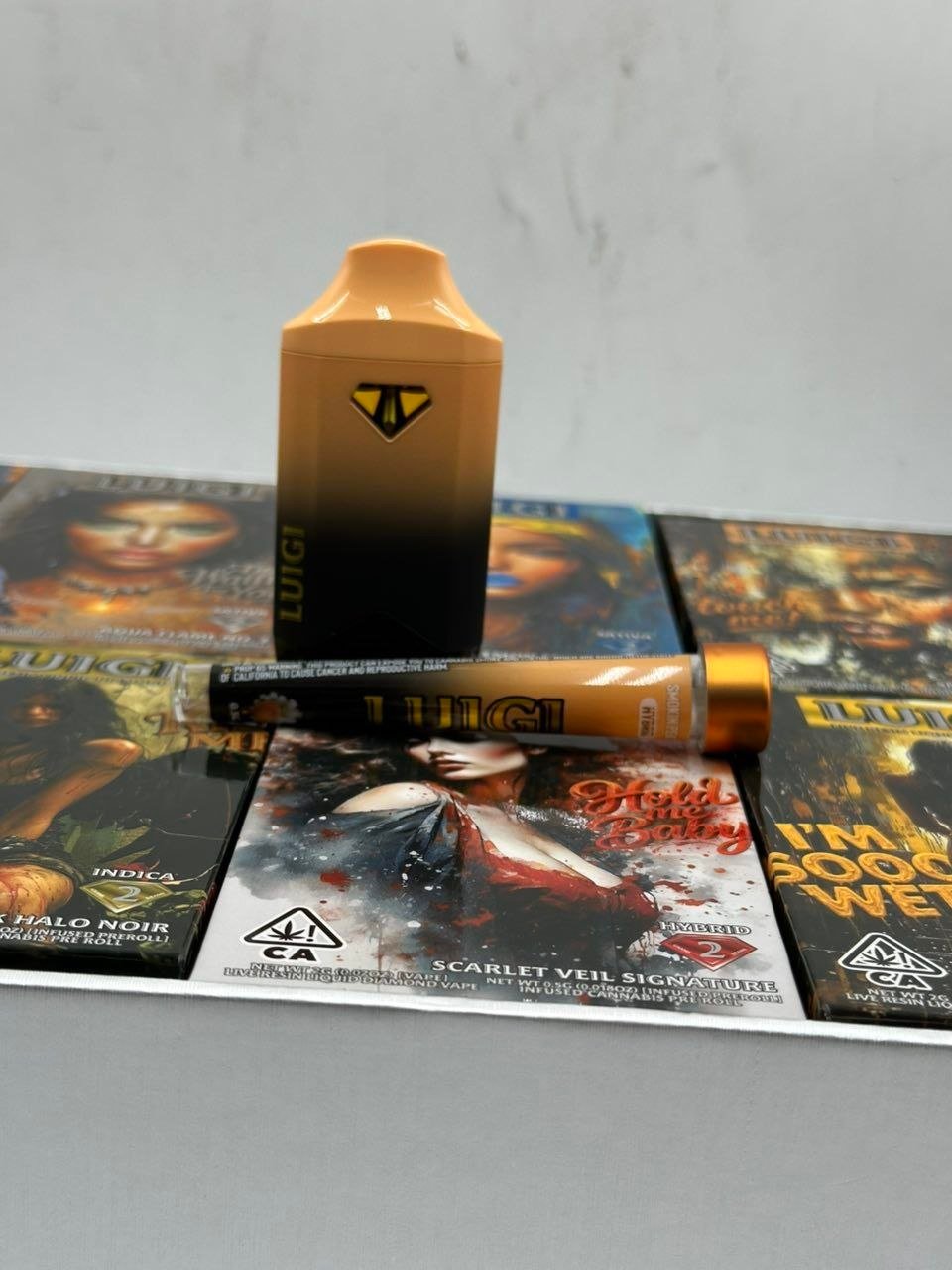



LUIGI SERIES 9 2G DISPOSABLE WITH PRE ROLL


Price range: $30.00 through $1,300.00
The Luigi Series 9 2G Disposable is presented as a compact, ready-to-use disposable device designed around convenience, portability, and a straightforward format. Its all-in-one construction keeps the main components together, creating a simple product profile without the need for a separate battery or additional hardware.
Luigi Series 9 2G Disposable
Product Overview
The Luigi Series 9 2G Disposable is presented as a compact, ready-to-use disposable device designed around convenience, portability, and a straightforward format. Its all-in-one construction keeps the main components together, creating a simple product profile without the need for a separate battery or additional hardware.
The Series 9 name gives this collection a distinctive identity, while the 2G designation refers to the stated capacity of the device. Because product specifications can vary between manufacturers, batches, and regional versions, the exact formulation, hardware configuration, and available flavor or strain selections should be confirmed from the packaging supplied with the individual product.
Meanwhile, the disposable format remains one of the most recognizable designs within the broader vapor-device category. A self-contained body can provide a compact appearance, and its portable structure makes it easy to store when it is not being used.
Design and Appearance
The Luigi Series 9 features a modern disposable-device format with an emphasis on a compact footprint. Its design is intended to keep the overall structure relatively straightforward, while the exterior provides the visual identity associated with the Series 9 collection.
A disposable device generally combines the reservoir, heating system, mouthpiece, and power components inside one housing. As a result, the exterior can remain clean and uncomplicated compared with larger devices that use interchangeable parts.
The finish and labeling may vary depending on the specific version. Therefore, packaging details remain important when identifying the exact product variant. In addition, official labeling can provide information about the manufacturer, contents, batch details, warnings, and other product-specific information.
2G Capacity
The 2G designation is one of the primary identifying features of the Luigi Series 9 Disposable. It indicates the stated quantity of material contained within the particular version.
Capacity, however, does not necessarily determine how long a device will last for every individual user. Usage patterns can differ substantially, and factors such as frequency, draw length, device design, and formulation may influence overall consumption.
For that reason, the 2G specification is best understood as a product-capacity description rather than a guarantee of a particular number of uses.
Additionally, users should rely on the original product packaging for the exact stated contents. Different versions can carry different specifications, so the label remains the most appropriate reference for the individual unit.
All-in-One Format

One of the defining characteristics of a disposable device is its all-in-one construction. The primary components are contained within the same unit rather than being separated into a reusable battery and replaceable cartridge.
This format creates a relatively simple product structure. There is no separate cartridge housing to match with an external battery, and there are fewer individual pieces involved in the overall design.
The compact construction can also make the device convenient to store. Its smaller form allows it to fit into many ordinary storage spaces without the bulk associated with larger hardware.
At the same time, disposable devices are designed around limited-use functionality rather than long-term hardware ownership. Once the usable contents or power supply are depleted, the unit is generally treated as a disposable product according to applicable local disposal requirements.
Device Construction
A typical disposable vapor device contains several functional elements within its outer shell. These can include an internal reservoir, heating component, battery, airflow pathway, and mouthpiece.
The heating element is responsible for converting the contents into an inhalable vapor. Airflow then moves through the internal pathway toward the mouthpiece. However, the precise internal construction of the Luigi Series 9 should be confirmed through manufacturer documentation because hardware specifications are not always identical across product versions.
The exterior therefore represents only part of the overall product. Inside the housing, multiple components work together within a relatively small space.
Because of this compact construction, the device should be handled carefully. Physical damage, exposure to excessive heat, or improper storage can affect the condition of a disposable unit.
Flavor and Variant Information
Specific Luigi Series 9 versions may be associated with different flavor, strain, or formulation names. Those names can vary according to the product line and market in which the unit is distributed.
For that reason, a general description should not assign a particular flavor or formulation to every Series 9 device. The exact variant name printed on the product label provides the most reliable identification.
Some versions may emphasize particular aromatic or taste characteristics, while others may use different formulation descriptions. Nevertheless, these characteristics should be considered specific to the labeled variant rather than universal features of the entire Series 9 range.
Product packaging can also provide additional information about the contents. In regulated markets, labels may identify the stated ingredients, cannabinoid quantities, batch information, manufacturing information, warnings, and testing details where applicable.
Portability
Portability is a central characteristic of the disposable format. The compact body is designed to occupy relatively little space, making the device easy to store compared with larger vapor hardware.
Its self-contained construction also means that a separate battery is not required as part of the basic device format. This gives the product a straightforward physical profile with fewer external components.
However, portability should not be confused with unrestricted use. Local laws and regulations concerning possession, transportation, and use of regulated products can differ considerably.
Accordingly, storage and transportation should always follow the requirements applicable in the user’s location.
Everyday Product Profile
The Luigi Series 9 2G Disposable has a product profile centered on simplicity. Instead of presenting multiple interchangeable components, the disposable design brings the primary hardware into one compact unit.
This approach can appeal to people who prefer a minimal physical setup. There are fewer separate pieces to keep track of, and the device does not rely on a conventional external battery-and-cartridge arrangement.
Furthermore, the compact form can complement a simple storage routine. When not in use, the unit can remain in an appropriate location away from excessive heat, moisture, children, and pets.
The product’s exact experience, however, depends on the specific formulation and hardware configuration. Consequently, packaging information remains essential when describing an individual unit accurately.
Product Identification
Authentic identification is particularly important with branded disposable products. The Luigi Series 9 name alone may not provide enough information to distinguish every version.
Packaging can contain several identifying details, including product naming, batch information, manufacturer information, capacity, warnings, and other labeling elements.
These details can help distinguish one variant from another. They can also provide information that is not apparent from the exterior design.
For that reason, product descriptions should complement rather than replace the original label. The packaging remains the primary source for exact specifications associated with a particular unit.
Packaging Details
The packaging of a disposable device typically provides important information about its contents and identity. Depending on the market, the package may include information relating to ingredients, quantity, manufacturer, batch identification, warnings, and testing.
Because regulations differ by jurisdiction, the exact information displayed can vary. Some markets require more detailed labeling than others.
The individual product package should therefore be examined carefully before relying on generalized specifications. In addition, discrepancies between the device and its packaging can be a reason to avoid treating a generalized online description as definitive.
Storage Considerations
Appropriate storage can help preserve the physical condition of a disposable device. Excessive heat, direct sunlight, moisture, and physical impact can potentially affect a device and its packaging.
A cool, dry storage environment is generally more appropriate for electronic disposable products than locations exposed to significant temperature changes.
The device should also remain away from children and pets. Furthermore, storage should comply with any applicable regulations for the particular product category.
Since the device contains an internal power source, it should not be exposed to conditions that could damage the battery or outer housing.
Responsible Product Information
The Luigi Series 9 2G Disposable belongs to a category of products that may be subject to age restrictions, possession rules, labeling requirements, and other regulations. Those requirements vary between jurisdictions.
Therefore, product availability and lawful use cannot be assumed solely from an online product listing. Local rules should be considered separately from the physical characteristics of the device.
Likewise, product descriptions should not imply medical benefits or guaranteed effects. Individual responses can vary, and claims about health outcomes should only be supported by appropriate evidence and authorized product information.
Hardware and Capacity in Context
The combination of disposable construction and a stated 2G capacity gives the Luigi Series 9 a recognizable product structure. Nevertheless, capacity alone does not describe every aspect of the device.
Two devices with similar stated capacities can differ in dimensions, heating technology, airflow, reservoir design, battery configuration, and formulation. Therefore, specifications should be evaluated as a complete set rather than relying on one number.
The Series 9 designation identifies a particular product family, while the 2G designation identifies its stated capacity. Other characteristics depend on the specific version.
This distinction is useful when comparing product labels or organizing product information because it reduces the chance of confusing different variants.
Quality and Verification
Product quality is influenced by manufacturing standards, storage conditions, packaging integrity, and the accuracy of labeling. As a result, the appearance of a device alone cannot establish its contents or authenticity.
Where testing information is provided, laboratory documentation and batch details can offer additional information about the product. However, those records should correspond to the specific product and batch rather than being treated as universal evidence for an entire product line.
Packaging integrity can also provide useful context. Missing labels, damaged packaging, inconsistent information, or unexplained discrepancies may warrant additional verification before the product is considered.
Distinctive Product Identity
The Luigi Series 9 name gives the device a recognizable identity within its product category. Its combination of a compact body, disposable structure, and stated 2G capacity creates a distinct product profile.
Rather than relying on interchangeable components, the device is built around an integrated format. This keeps the overall structure simple and makes the product easy to identify by its form.
At the same time, individual variants may differ. Flavor names, formulation information, hardware details, and packaging can change between versions.
Consequently, the exact unit should always be identified by its complete label rather than by the Series 9 name alone.
Product Information at a Glance
Why Product Details Matter
Accurate product information matters because disposable devices can look similar while containing different formulations or specifications. A small difference in the product label can therefore represent a meaningful difference between versions.
For example, two units may share the same series name while carrying different variant names. Their packaging may also display different contents, batch numbers, or manufacturing information.
Therefore, the most reliable product description combines the recognizable features of the Series 9 with the specific information printed on the individual unit.
This approach also creates clearer product records. Retail catalogs, inventory systems, and product pages can distinguish variants more effectively when descriptions are based on verified specifications rather than assumptions.
A Modern Disposable Format
Disposable vapor products have developed into a recognizable segment of the broader electronic vapor-device market. Their compact construction reflects a design preference for integrated hardware rather than interchangeable components.
The Luigi Series 9 2G Disposable follows this general format with its stated capacity and self-contained design. Its physical structure focuses on keeping the main components together within one device.
As a result, the product presents a straightforward appearance without the additional hardware associated with some reusable systems.
However, the convenience of an integrated design also means that the device is intended for a limited product lifecycle. Once its usable contents or power supply have been exhausted, the unit is no longer equivalent to reusable hardware.
The Luigi Series 9 2G Disposable is a compact, all-in-one disposable device identified by its Series 9 product family and stated 2G capacity. Its integrated construction brings the principal components into one unit, creating a straightforward physical design with minimal external hardware.
Its exact formulation, variant, flavor profile, hardware specifications, and labeling should be confirmed from the individual package because those details may differ between versions.
Overall, the product can be described through its core characteristics: a recognizable Series 9 identity, a stated 2G capacity, integrated disposable construction, compact form, and variant-specific packaging information.
For accurate product information, the original label remains the most reliable reference. In addition, applicable age, possession, storage, transportation, and disposal requirements should be followed according to the laws governing the relevant location.
Materials and Physical Structure

The physical structure of the Luigi Series 9 2G Disposable is centered on an integrated housing. Rather than separating the main components into individual pieces, the disposable format places them within a single exterior body.
This construction can create a clean product profile because fewer external parts are visible. The mouthpiece, internal reservoir, heating assembly, and power source are generally incorporated into the overall device structure.
The exact materials used in each component can vary by manufacturer and product version. Therefore, specific material claims should be based on the official documentation associated with the particular unit.
The outer housing also serves a practical purpose by protecting the internal components during ordinary storage and handling. Nevertheless, disposable electronics remain sensitive to excessive heat, moisture, impact, and other unsuitable conditions.
Capacity and Product Specifications
The stated 2G capacity is an important identifying specification for this version of the Luigi Series 9. However, capacity should not be interpreted as a fixed measurement of duration or number of uses.
Individual consumption patterns differ considerably. In addition, hardware characteristics and formulation can affect how quickly the contents are consumed.
Consequently, the 2G figure is best presented as the labeled product capacity rather than a promise regarding longevity. The original packaging should always take priority if an online listing and the physical label contain different information.
Other specifications may also differ between versions. These can include dimensions, battery characteristics, heating technology, formulation, and available variants.
Variant Recognition
A product series can contain multiple versions that share a similar exterior while carrying different internal specifications. The Luigi Series 9 should therefore be identified through its complete product name and packaging details.
Variant names can distinguish differences in flavor, formulation, or other characteristics. Because these details are not necessarily universal across the entire series, a general description should avoid assigning one particular profile to every unit.
The label can also provide additional identifiers. Batch information, manufacturer details, capacity statements, and regulatory markings can help establish the identity of a specific product.
As a result, careful product identification creates a more accurate description and reduces confusion between similar-looking units.
Product Labeling
Labeling plays an important role in distinguishing regulated consumer products. Depending on the jurisdiction, packaging may contain information concerning contents, quantity, manufacturer, warnings, batch identification, and other required details.
The amount of information can vary according to local regulations. Some jurisdictions may require extensive labeling, while others use different standards.
For this reason, information displayed on an individual package should be treated as more authoritative than generalized descriptions found elsewhere.
Clear labeling also supports better inventory organization. When several variants are stored within the same product range, the complete product name and batch information can help keep records separated.
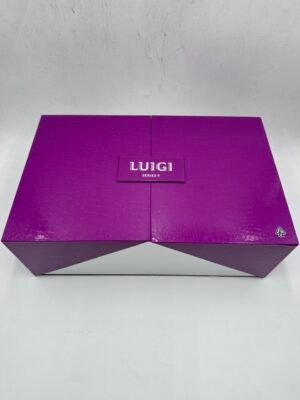
Packaging Presentation
Packaging is part of the product’s overall presentation and may contain information that cannot be determined from the device itself.
The exterior package can identify the series, capacity, variant, manufacturer, and other relevant details. It may also include warnings or regulatory information that applies to the product category.
Because packaging designs can change over time, an older image should not automatically be treated as representative of every current unit.
Similarly, visual differences between packaging versions do not necessarily indicate differences in the underlying product. Official product information remains the appropriate reference when specifications need to be confirmed.
Storage Environment
Electronic disposable devices are generally better protected when stored in suitable environmental conditions. Excessive temperatures can affect internal electronic components, while moisture can create additional risks for electronic hardware.
Direct sunlight can also increase the temperature of the device and its surrounding packaging. Therefore, a stable storage environment is preferable to locations exposed to prolonged heat or environmental extremes.
Physical pressure should also be avoided. A damaged exterior can affect the condition of internal components, while damaged packaging may compromise the presentation or identification of the product.
Storage should additionally keep the device inaccessible to children and pets.
Battery Considerations
The disposable format incorporates an internal power source into the overall device. Although the battery is not normally visible, it remains an important component of the product’s construction.
Battery-powered devices should be treated as electronic products rather than ordinary packaging. Exposure to excessive heat, crushing, puncturing, water, or other damaging conditions can create safety concerns.
The internal battery also contributes to the limited lifecycle of the disposable format. When the power source can no longer support the device, the product may no longer function even if some contents remain.
The exact battery specification should only be stated when it has been verified from the manufacturer’s documentation.
Airflow and Internal Operation
A disposable device generally contains an internal airflow pathway connecting the exterior opening with the heating assembly. The precise arrangement depends on the hardware design.
Airflow can influence the physical operation of a device, but individual specifications should not be assumed without manufacturer documentation.
Likewise, descriptions of draw characteristics, heating temperature, vapor output, or performance should be treated as model-specific information rather than universal characteristics of every Series 9 unit.
This distinction is especially important because hardware revisions can occur while a product continues to use the same general product name.
Manufacturing Information
Manufacturing details can provide useful context when evaluating a specific product. Batch identification, production information, and manufacturer labeling can help distinguish one unit from another.
These details are particularly relevant when multiple versions of a product exist. A product name alone may not identify the precise manufacturing batch or formulation.
Where testing documentation is supplied, it should correspond to the specific product and relevant batch. A document associated with a different product should not automatically be considered applicable.
Therefore, traceability information is an important part of accurate product documentation.
Product Authenticity
Authenticity can be difficult to establish from appearance alone. Disposable devices can share similar shapes, colors, or packaging styles, while differences may exist internally.
Packaging information can provide useful clues, but visual inspection by itself does not establish the contents or manufacturing history of a product.
Where an official verification system exists, information from the manufacturer or authorized source can provide additional context. Any verification process should be based on the specific product’s official documentation rather than an unrelated third-party claim.
Accurate records are also useful for distinguishing legitimate inventory from unidentified products.
Product Lifecycle
The Luigi Series 9 2G Disposable is designed around a limited product lifecycle. Unlike reusable hardware, the disposable format is not primarily structured around replacing individual components over an extended period.
Its integrated construction means that the main components remain together throughout the product’s intended lifecycle.
Eventually, the device reaches the point at which its contents, power supply, or functional components are no longer available for normal operation. At that stage, the product enters the disposal stage.
Electronic components should be handled according to applicable waste-management requirements rather than being treated as ordinary household waste where local regulations require specialized disposal.
Environmental Considerations
Disposable electronics create waste because the housing, battery, and other components are generally discarded as a single unit after their useful lifecycle.
For that reason, disposal requirements can be important. Some jurisdictions provide dedicated collection systems for electronic products or battery-containing devices.
The appropriate disposal method depends on local regulations and available facilities. Product packaging may also contain disposal information for the relevant market.
Responsible handling can reduce the risk associated with damaged batteries and other electronic components entering unsuitable waste streams.
Differences Between Product Versions
Products within one series are not necessarily identical. Manufacturers can introduce hardware revisions, packaging changes, new variants, or updated labeling while retaining a familiar series name.
Consequently, product descriptions should distinguish established series-level information from specifications that apply only to a particular version.
The Luigi Series 9 name identifies the broader product family, while the 2G designation identifies the stated capacity of the version being described. Other characteristics require additional confirmation.
This approach keeps the description accurate without assuming that every unit shares identical specifications.
Product Information and Consumer Expectations
Clear product information helps establish realistic expectations. A description should identify measurable characteristics without presenting unsupported claims about effects, duration, or performance.
For example, the luigi series 9 2g disposable specification communicates stated capacity, but it does not guarantee a specific lifespan. Similarly, the disposable format describes the hardware category but does not establish the precise formulation contained in every version.
This distinction makes product information easier to understand. It also reduces confusion when different variants are presented under the same broader series.
General Product Characteristics
Several characteristics define the Luigi Series 9 2G Disposable at a general level. These include its disposable construction, integrated components, stated 2G capacity, and Series 9 product identity.
The device’s compact structure separates it from larger reusable systems that use removable or replaceable components.
Meanwhile, variant-specific characteristics remain dependent on the individual product. Flavor, formulation, hardware revisions, and labeling should therefore be confirmed from the package associated with that unit.
Product Comparison Considerations
When comparing the luigi series 9 2g disposable with another disposable product, several specifications can be considered independently.
Capacity provides information about the stated quantity. Physical dimensions describe the size of the device. Hardware specifications provide information about its internal design. Variant information identifies differences in formulation or flavor. Packaging details help establish the exact product version.
Looking at these characteristics separately creates a more accurate comparison than relying on a single feature.
A larger stated capacity, for example, does not automatically establish longer operating life because consumption and hardware characteristics can differ.
Accurate Product Descriptions
A strong product description separates confirmed specifications from general observations. This is particularly important when a product has multiple variants.
The Luigi Series 9 2G Disposable can therefore be described through its verified product name, series designation, and stated capacity. Additional characteristics should be connected to the exact variant whenever supporting documentation is available.
This structure also makes product pages easier to maintain. If a manufacturer changes packaging or introduces a new variant, the affected information can be updated without rewriting unrelated product details.
Closing Overview
The Luigi Series 9 2G Disposable represents an integrated disposable-device format with a stated 2G capacity and a recognizable Series 9 identity. Its construction brings the principal components together inside one compact housing.
Specific details can differ between individual versions, so the original packaging remains important for confirming formulation, variant name, manufacturer information, batch details, and other specifications.
The device should also be treated as an electronic product because it contains an internal power source. Appropriate storage, handling, and disposal therefore form an important part of responsible product ownership.
Ultimately, the most accurate description combines the established characteristics of the luigi series 9 2g disposable format with the verified information printed on the individual product. This keeps the product information clear, distinct, and useful without making unsupported claims about specifications that may vary between versions.
Be the first to review “LUIGI SERIES 9 2G DISPOSABLE WITH PRE ROLL”
Related products

THC DISPOSABLE

THC DISPOSABLE

THC DISPOSABLE
THC DISPOSABLE
THC DISPOSABLE

THC DISPOSABLE

THC DISPOSABLE
THC DISPOSABLE
Reviews
There are no reviews yet.